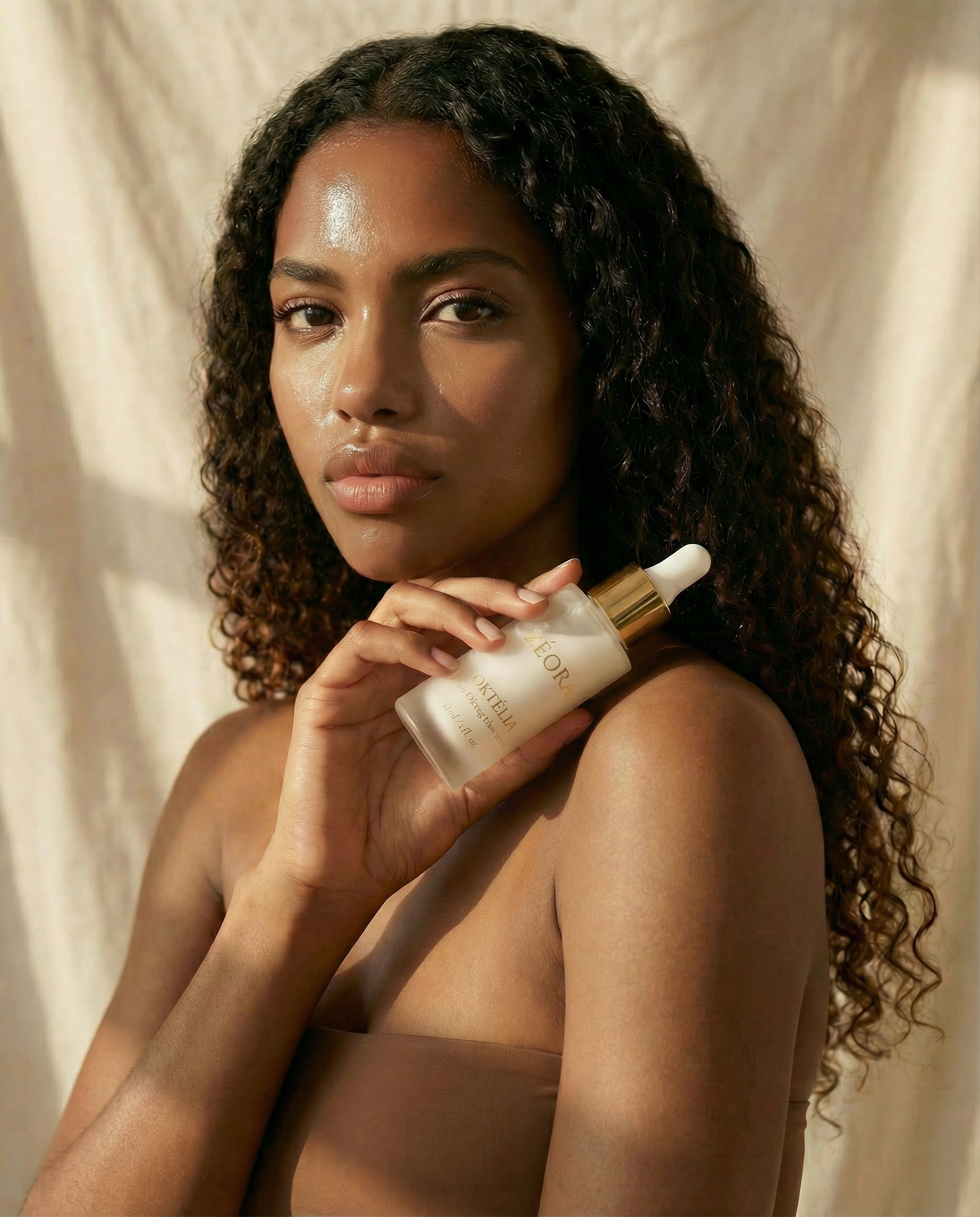
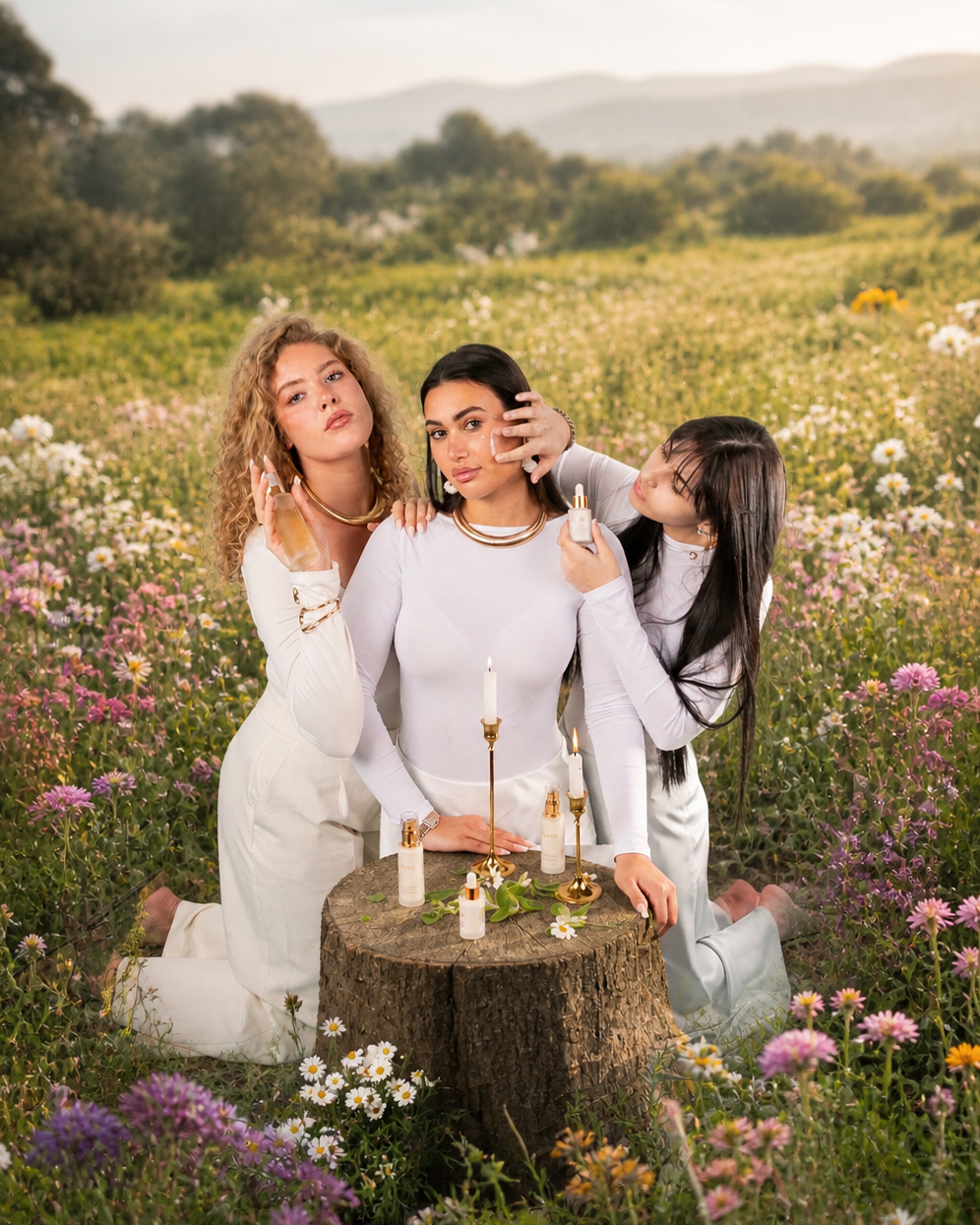
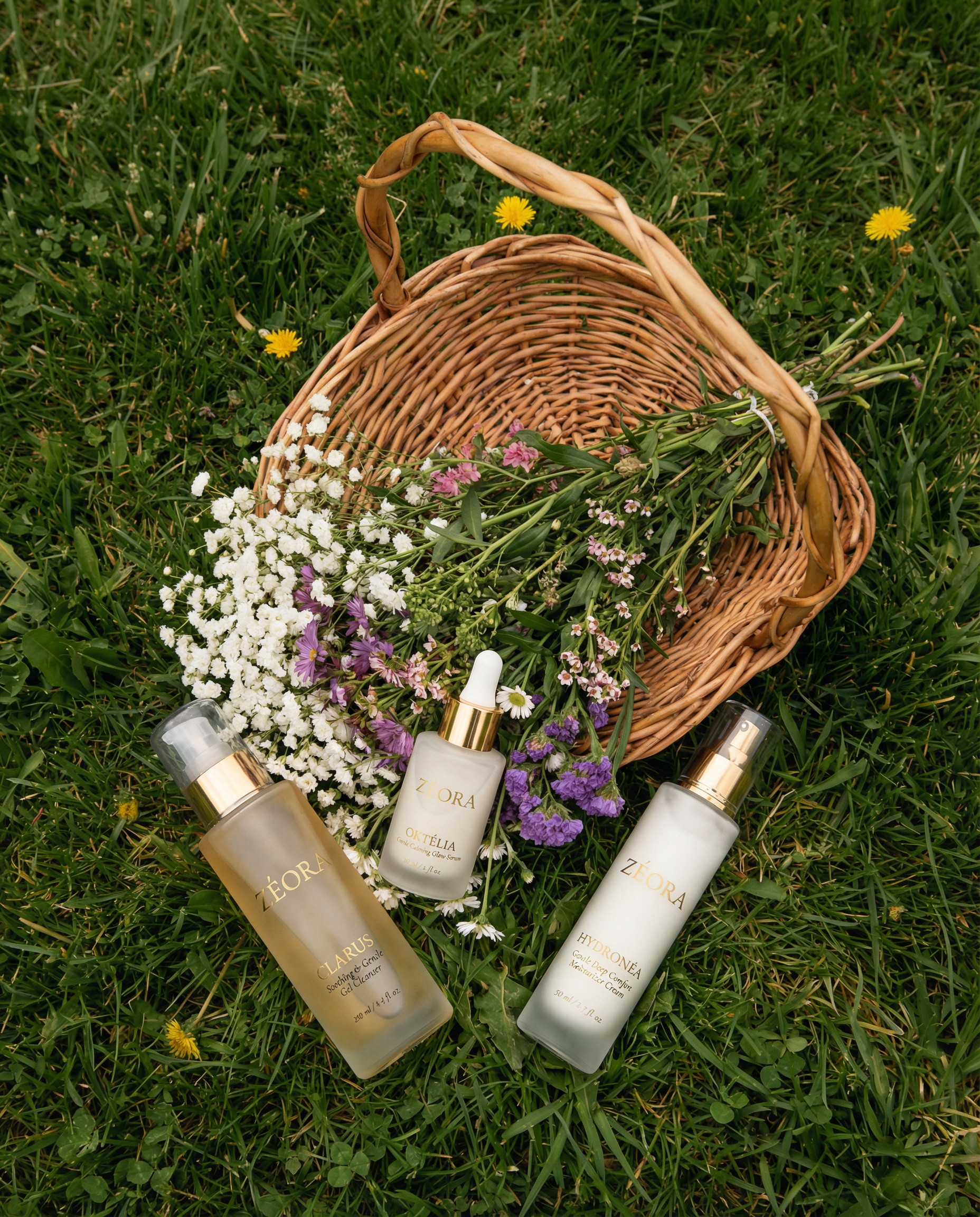
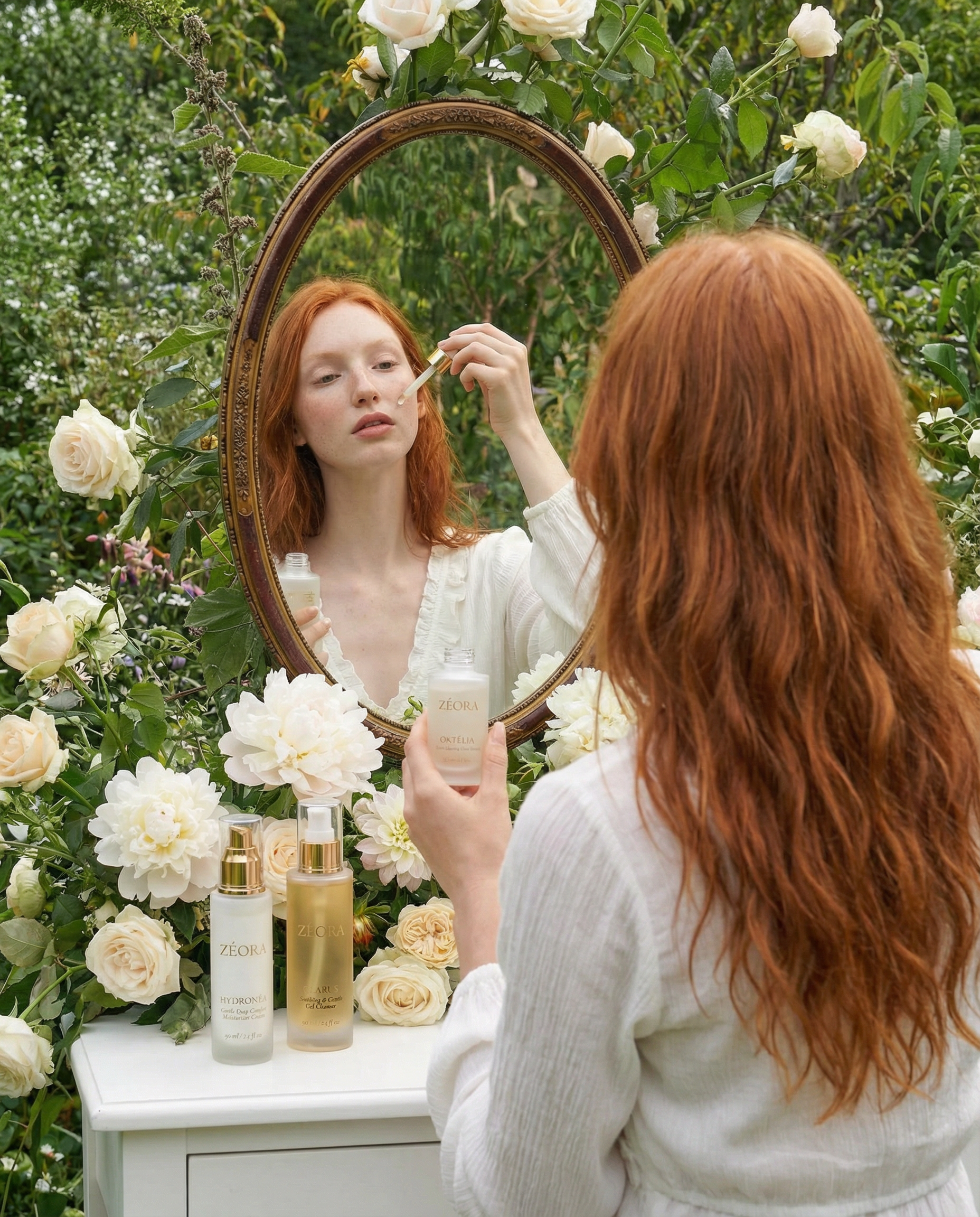
Chamomile is the flower most of us know from a cup of tea before bed. It's also in every bottle of the ZÉORA Ritual. Read the ingredient lists of Clarus, Oktélia and Hydronéa and you'll find Chamomilla Recutita (Matricaria) Flower Extract in all three. Hydronéa goes one step further: it also lists Bisabolol, one of the main compounds in chamomile, as an ingredient on its own.
Here's what chamomile and bisabolol are, what published research says about them (and what it doesn't), and why they belong in the Ritual.
What chamomile is
The chamomile in ZÉORA is German chamomile (Matricaria chamomilla, also listed as Chamomilla recutita), a small daisy-like flower from the Asteraceae family, the same plant family as yarrow. A 2011 overview in Pharmacognosy Reviews notes that it is native to southern and eastern Europe, was known in ancient Greece, and is one of the best-selling herbs in the world, sold both as dried flowers for tea and as a deep-blue essential oil used in perfumery, cosmetic creams and skin lotions (Pharmacognosy Reviews, 2011).
On ZÉORA labels it's listed as Chamomilla Recutita (Matricaria) Flower Extract, meaning it is drawn from the flowers of the plant.
What bisabolol is
Bisabolol (α-bisabolol) is a naturally occurring compound found in chamomile flowers. The same 2011 overview lists α-bisabolol and chamazulene, the compound behind the oil's blue color, among the principal components of chamomile essential oil, and notes that the amount of each depends on the variety, how the plant is grown and when the flowers are picked (Pharmacognosy Reviews, 2011).
Bisabolol can also be added to a formula on its own, as a separate ingredient, rather than coming only from a plant extract. In ZÉORA, that's Hydronéa, which lists both chamomile flower extract and bisabolol.
What research says about chamomile and bisabolol
Most chamomile research is about the plant and its chemistry, not about finished skincare, so it's worth being precise about what the studies cover.
- A plant rich in aromatic compounds. The 2011 overview describes chamomile flowers as containing a wide range of naturally occurring plant compounds, including terpenoids such as bisabolol and chamazulene, and flavonoids (Pharmacognosy Reviews, 2011).
- Antioxidant activity and skin hydration in a small study. In a 2013 study from the University of São Paulo, published in Biomedical and Biopharmaceutical Research, researchers measured the antioxidant activity of a chamomile extract in the lab, then tested simple cosmetic creams containing either chamomile extract or α-bisabolol on 25 women. After a single application, both the chamomile cream and the bisabolol cream reduced water loss through the skin. After 2 and 4 weeks of daily use, only the chamomile-extract cream increased skin hydration compared with the same cream without it (Biomedical and Biopharmaceutical Research, 2013).
Neither paper tested ZÉORA products, and the 2013 study used its own formulas and concentrations. The research helps explain why chamomile and bisabolol are valued in skincare, not how they perform in a finished formula on your skin.
Why chamomile is in ZÉORA
ZÉORA began with a notebook from 1850, kept by a woman named Zéora on the Greek island of Samos. She had reactive, sensitive skin and studied the plants growing around her, keeping only what her skin accepted. Chamomile, a flower already known in ancient Greece, fits naturally into her story.
It's one of the seven botanicals of our Samos Garden, alongside Greek-sourced yarrow, sage, damask rose, lemon balm, green tea and marjoram. The same seven plants appear in every step, so chamomile travels with you through the whole routine. We chose it as a gentle, familiar flower that helps skin feel calm and comfortable. Hydronéa, the final step, also contains bisabolol on its own.
Where you'll find it
- Clarus, our gentle gel cleanser (100 ml): chamomile flower extract.
- Oktélia, our lightweight serum (30 ml): chamomile flower extract.
- Hydronéa, our replenishing cream (50 ml): chamomile flower extract and bisabolol.
All three come together in The ZÉORA Ritual.
How to use the Ritual
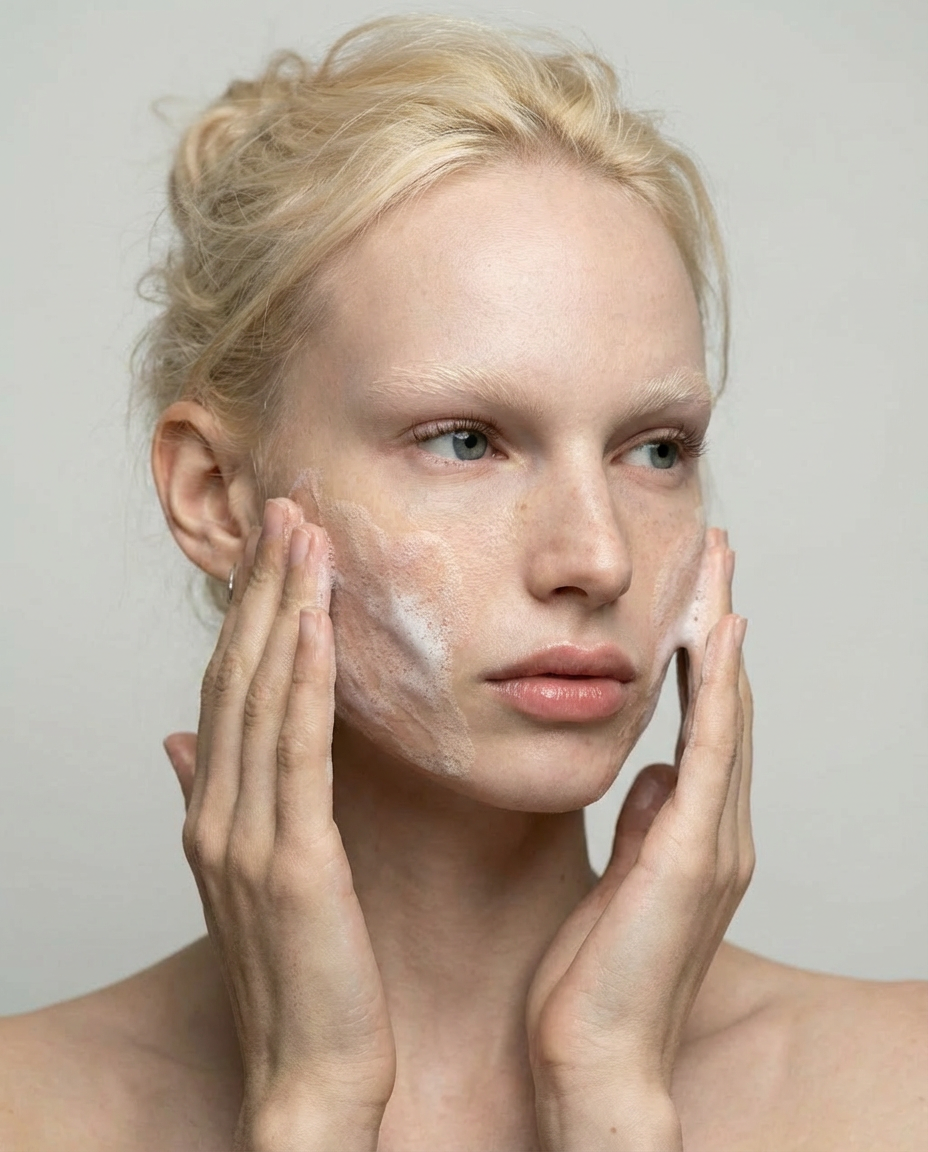
- Clarus · Cleanse. Massage 1–2 pumps of Clarus onto damp skin for a few seconds, rinse lightly and pat dry.
- Oktélia · Calm. Apply 3 drops of Oktélia, one on the forehead and one on each cheek, and spread until absorbed.
- Hydronéa · Restore. Smooth Hydronéa evenly over clean skin to seal in hydration.
Use the routine morning and evening. Hydronéa does not contain SPF, so in the morning finish with a broad-spectrum sunscreen you already tolerate.
A note for sensitive skin
Chamomile belongs to the daisy family, so if you know you react to chamomile or to plants in that family, check each ingredient list before trying a new product. Hydronéa is our fragrance-free step. Clarus and Oktélia do contain fragrance, and every full ingredient list is on its product page, so you can check each one before you buy.
If your skin is sensitive, introduce one new product at a time and patch-test first. The American Academy of Dermatology explains how to test a skincare product before using it on your face.
Keep reading
- Sweet Marjoram for Sensitive Skin: The Herb in Every ZÉORA Step
- Lemon Balm for Sensitive Skin: The Herb in Every ZÉORA Step
- The Samos Garden: 7 Botanicals in Every ZÉORA Step
- Yarrow for Sensitive Skin: The Ancient Botanical Behind ZÉORA's Barrier Repair Formula
This article is general skincare information, not medical advice. ZÉORA products are cosmetics, not medicines. If you have a skin condition, or notice persistent redness, itching, swelling or a rash, please speak with a board-certified dermatologist before changing your routine.