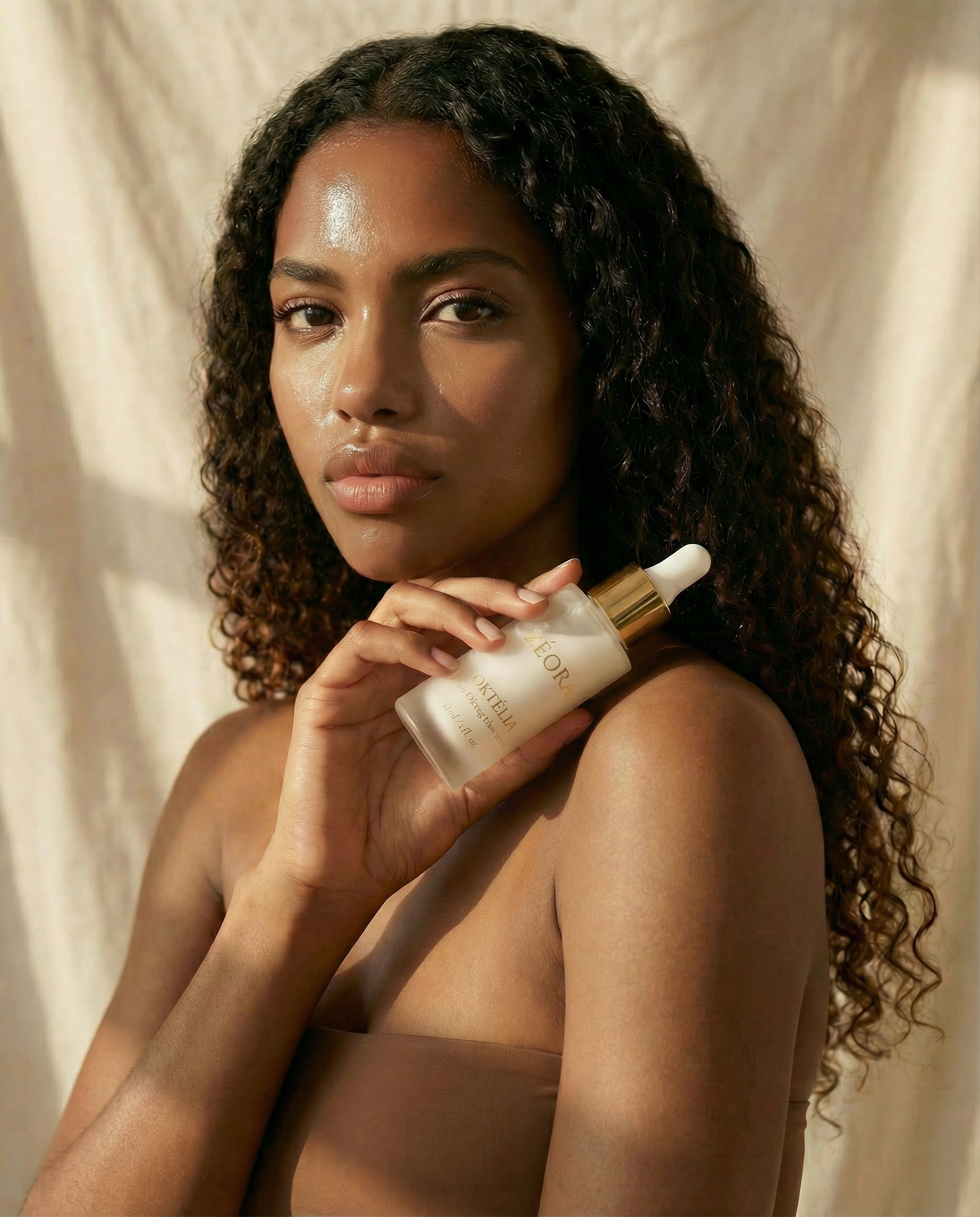
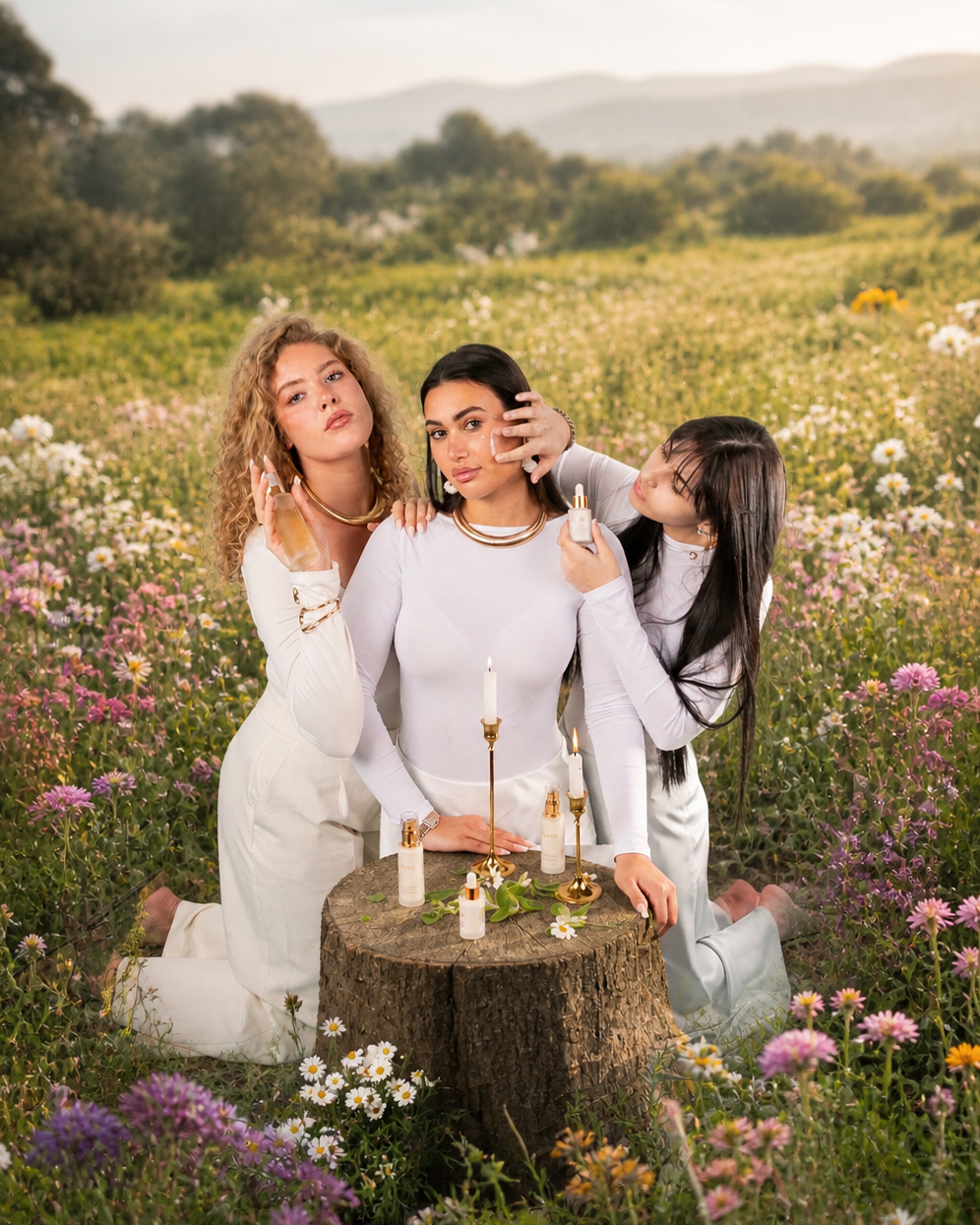
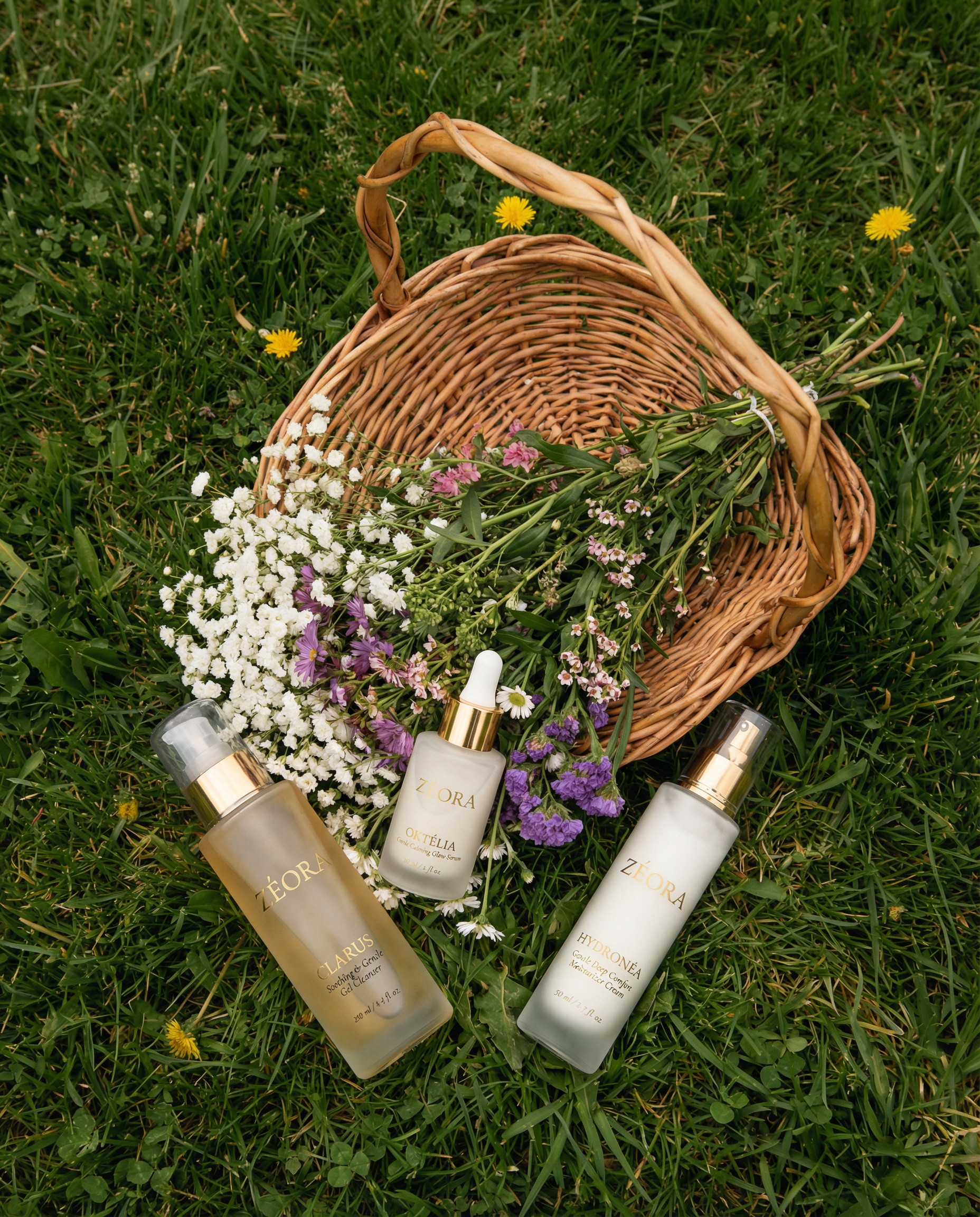
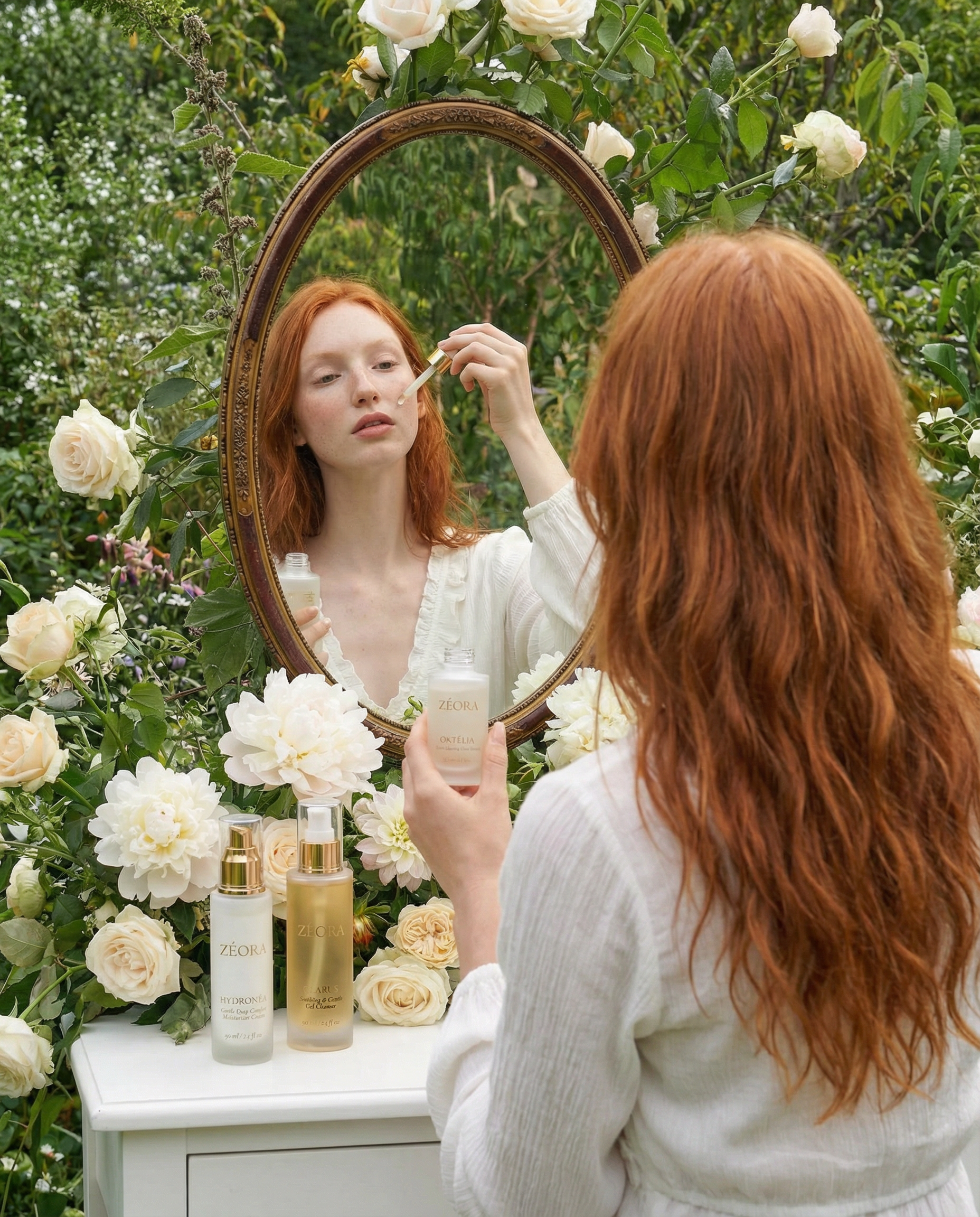
Every ZÉORA product is a little different. Clarus is a gel cleanser, Oktélia is a milky serum and Hydronéa is a cream. But look closely at the three ingredient lists and you'll find the same seven plants in every one: yarrow, sage, damask rose, chamomile, lemon balm, green tea and marjoram.
We call this group the Samos Garden. Here's where the name comes from, what each plant is, what published research says about a few of them, and why we put the same garden into every step of the ZÉORA Ritual.
Where the Samos Garden comes from
ZÉORA began with a notebook from 1850, kept by a woman named Zéora on the Greek island of Samos. She had reactive, sensitive skin and studied the plants growing around her, keeping only what her skin accepted. The Samos Garden is our tribute to that habit: one shared set of botanicals that runs through the whole routine, so each step feels like part of the same story.
The seven plants, one by one
Here they are as they appear on our labels, with their international (INCI) ingredient names.
- Greek-sourced yarrow (Achillea Millefolium Extract). A feathery-leaved flowering herb whose genus is named after Achilles from Greek myth. Read more in our yarrow article.
- Sage (Salvia Officinalis Leaf Extract). The silvery Mediterranean herb. We covered it in our sage article.
- Damask rose (Rosa Damascena Flower Extract). The classic perfumer's rose, explored in our damask rose article.
- Chamomile (Chamomilla Recutita Flower Extract). The daisy-like flower best known as a tea. It naturally contains a compound called bisabolol.
- Lemon balm (Melissa Officinalis Extract). A lemon-scented herb from the mint family. Its botanical name, Melissa, is the Greek word for honeybee.
- Green tea (Camellia Sinensis Leaf Extract). The leaf of the tea plant, rich in plant compounds called catechins.
- Sweet marjoram (Origanum Majorana Leaf Extract). A gentle Mediterranean cousin of oregano that you rarely see on a skincare label.
What research says about a few of them
We've written about yarrow, sage and damask rose separately, so here's a fair look at published work on three of the others. None of these studies tested ZÉORA products.
- Lemon balm. Researchers in Romania studied a water-based lemon balm leaf extract. When they applied it to the skin of hairless mice, they measured better skin hydration and less water loss through the skin (Sipos et al., Molecules, 2021). That was an animal study using a specific extract, so it doesn't tell us how lemon balm behaves in a finished product on human skin.
- Green tea. A review in the Journal of the American Academy of Dermatology summarizes research on green tea polyphenols, the catechins, and explains that compounds like these can neutralize free radicals (Hsu, J Am Acad Dermatol, 2005). That's why green tea is so often described as an antioxidant ingredient.
- Chamomile and bisabolol. A review of chamomile research notes that the main compounds in its flowers include α-bisabolol and chamazulene (Srivastava et al., Molecular Medicine Reports, 2010). Hydronéa contains chamomile extract and also lists bisabolol on its own.
For marjoram, most published research looks at its essential oil in the lab rather than on skin, so we'd rather not stretch it. We include it because it belongs in a Mediterranean garden and rounds out the blend.
Why the same garden is in every step
A routine works best when its steps get along. Instead of giving each product a completely different set of plants, we gave all three the same seven botanicals and built each formula's texture and job around them. Clarus brings aloe vera and a gentle gel base, Oktélia adds sweet almond oil and evodia fruit extract, and Hydronéa adds aloe vera, panthenol, bisabolol and propolis wax. The Samos Garden is the thread that ties them together.
Where you'll find it
- Clarus, our gentle gel cleanser (100 ml).
- Oktélia, our lightweight serum (30 ml).
- Hydronéa, our replenishing cream (50 ml).
Or get all three together in The ZÉORA Ritual.
How to use the Ritual
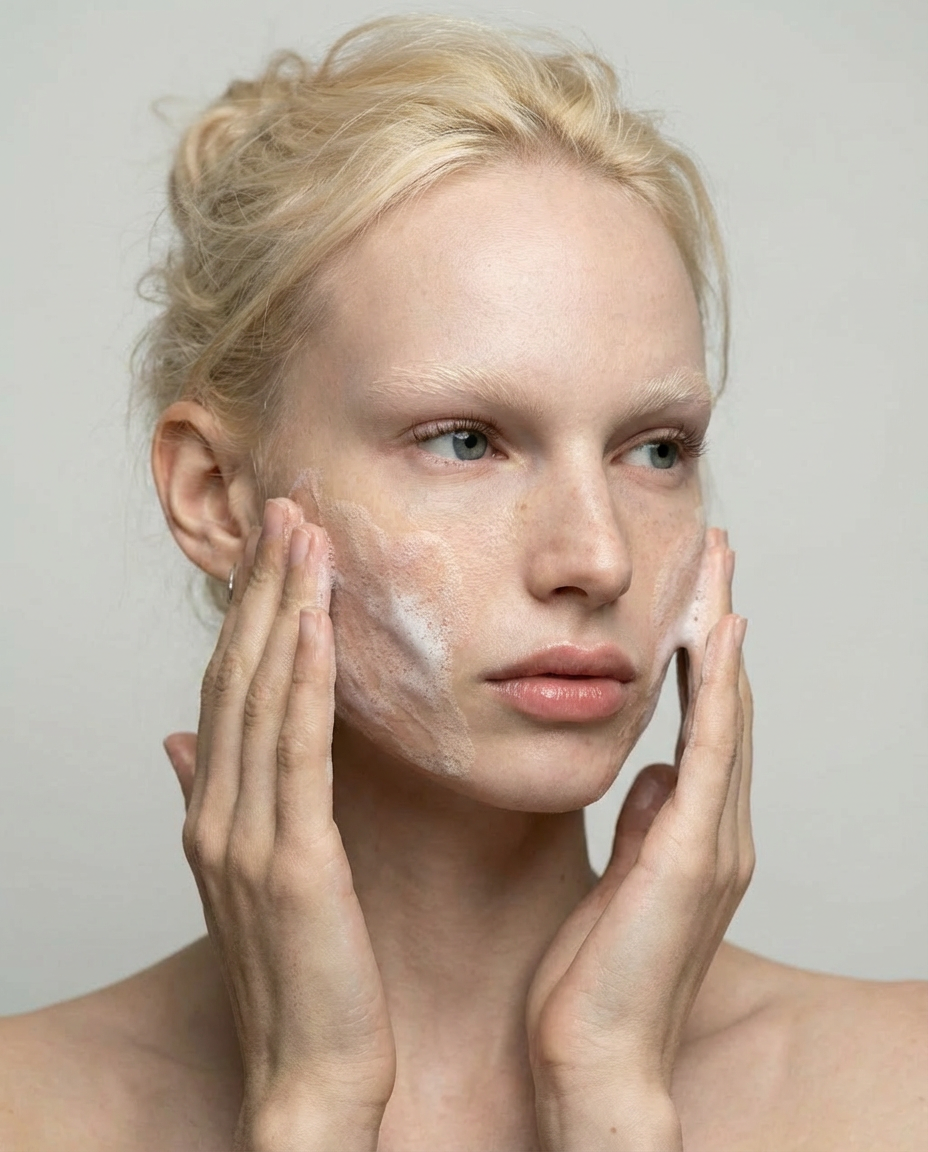
- Clarus · Cleanse. Massage 1–2 pumps of Clarus onto damp skin for a few seconds, rinse lightly and pat dry.
- Oktélia · Calm. Apply 3 drops of Oktélia, one on the forehead and one on each cheek, and spread until absorbed.
- Hydronéa · Restore. Smooth Hydronéa evenly over clean skin to seal in hydration.
Use the routine morning and evening. Hydronéa does not contain SPF, so in the morning finish with a broad-spectrum sunscreen you already tolerate.
A note for sensitive skin
Botanical doesn't automatically mean right for everyone. Chamomile and yarrow belong to the daisy family, which some people are sensitive to, so if you know you react to these plants, check each ingredient list before you buy. Hydronéa is our fragrance-free step; Clarus and Oktélia do contain fragrance, and every full ingredient list is on its product page.
If your skin is sensitive, introduce one new product at a time and patch-test first. The American Academy of Dermatology explains how to test a skincare product before using it on your face.
Keep reading
- Propolis for Sensitive Skin: The Hive Ingredient in Hydronéa
- Evodia for Sensitive Skin: The Rare Fruit Extract in Oktélia
- Damask Rose for Sensitive Skin: The Rose in Every ZÉORA Step
- Sage for Sensitive Skin: The Mediterranean Herb in Every ZÉORA Step
- Aloe Vera for Sensitive Skin: Why It's Ingredient #2 in ZÉORA
This article is general skincare information, not medical advice. ZÉORA products are cosmetics, not medicines. If you have a skin condition, or notice persistent redness, itching, swelling or a rash, please speak with a board-certified dermatologist before changing your routine.