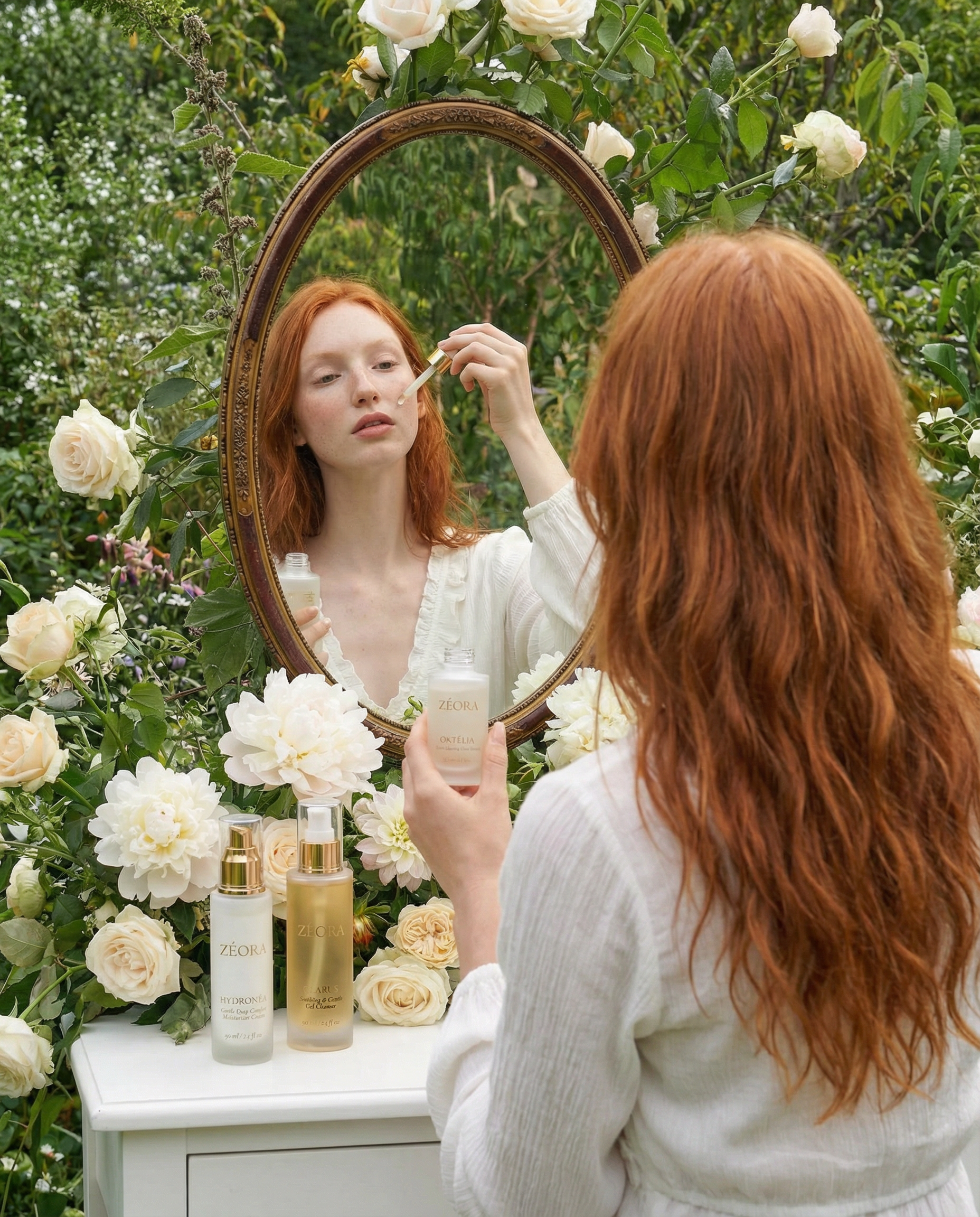
Most of the plants in ZÉORA are familiar names: yarrow, sage, aloe vera and the damask rose. Evodia is different. It's a small fruit with a long history in East Asia, and many people have never seen it on a skincare label. In ZÉORA, you'll find it in one place: our Oktélia serum.
Here's what evodia is, what published research says about it, and why it's part of Oktélia, the Calm step of the ZÉORA Ritual.
What evodia is
Evodia (Evodia rutaecarpa, also spelled Euodia, and now often classified by botanists as Tetradium ruticarpum) grows as a small tree or shrub, about 3 to 5 meters tall. Its fruits are small and purplish red, with oil glands on the surface. The dried, nearly ripe fruit is known as Wuzhuyu in China, Goshuyu in Japan and Osuyu in Korea. It has been part of traditional Chinese herbal practice for more than 2,000 years and was first recorded in Shen Nong's Herbal Classic, one of China's oldest herbal books (Xiao et al., Natural Products and Bioprospecting, 2023).
On an ingredient list you'll see it written as Evodia Rutaecarpa Fruit Extract, the international (INCI) name for an extract made from the fruit.
What research says about evodia
Most of the research on evodia looks at the fruit as a traditional herb. A smaller set of studies has looked at it in relation to skin. Here's a fair summary of what's been published.
- A 2023 review gathers the botany, traditional use and plant chemistry of evodia fruit. It describes a group of compounds called alkaloids, including evodiamine and rutaecarpine, as the focus of recent interest, and notes that most of the reported activity comes from preclinical (lab and animal) models (Xiao et al., Natural Products and Bioprospecting, 2023).
- In 2006, researchers tested a lab-made blend of three compounds found in evodia fruit (rutaecarpine, dehydroevodiamine and evodin), prepared from synthetic and natural sources. They studied it in cultured skin cells and on people's skin, where it reduced the temporary redness caused by methyl nicotinate, a substance used in skin research to trigger redness on purpose. This was a defined blend rather than the whole fruit extract, and the lead author worked for a skin science company (Yarosh et al., Journal of Dermatological Science, 2006).
It's worth being honest about the limits. These papers reviewed the wider science or tested specific evodia materials in cells and in a short test on skin. None of them tested ZÉORA products, and lab results don't automatically carry over to a finished serum on your skin.
Why evodia is in ZÉORA
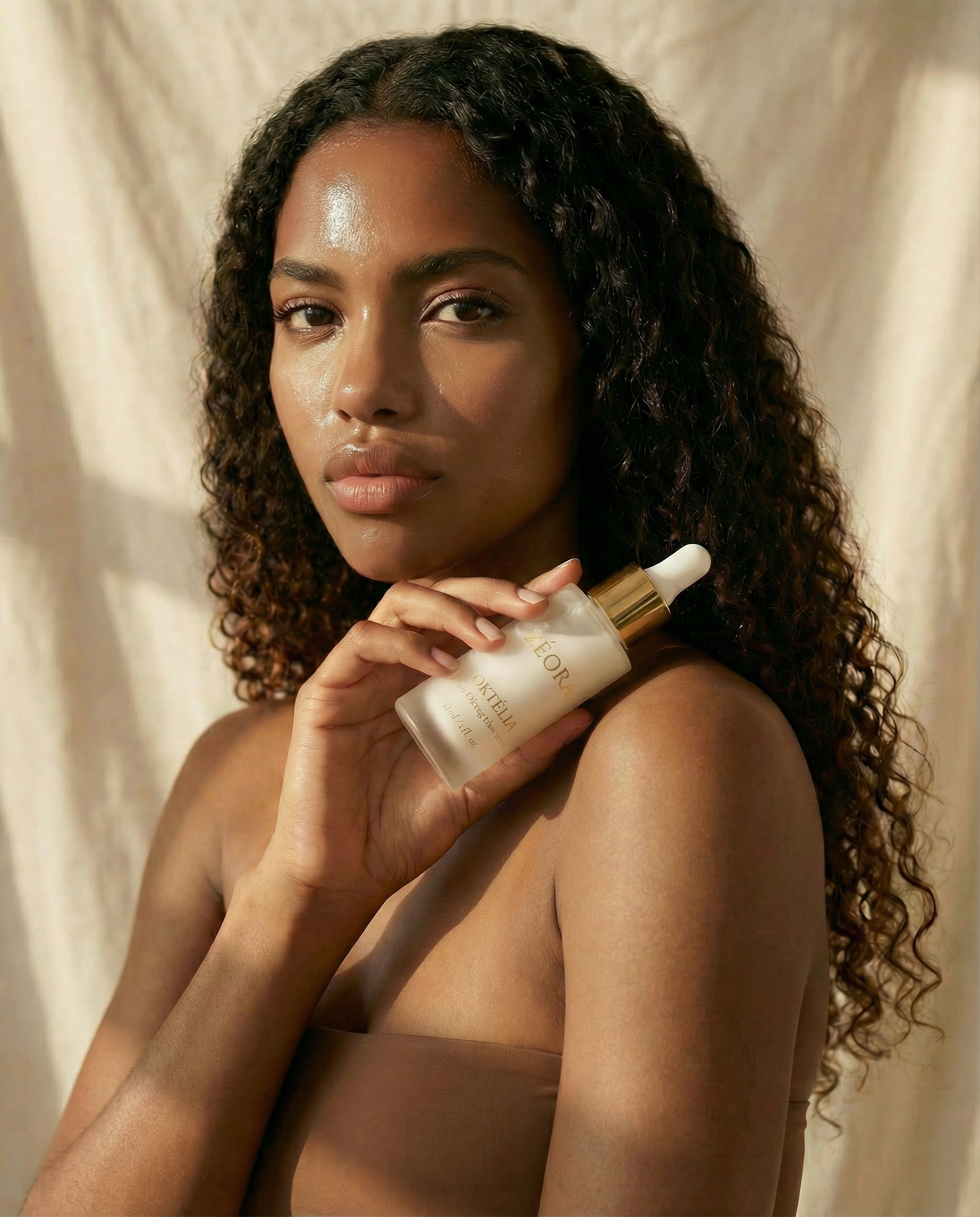
ZÉORA began with a notebook from 1850, kept by a woman named Zéora on the Greek island of Samos. Most of the botanicals in our formulas come from the Mediterranean and Middle Eastern plant world she knew. Evodia comes from further away, from the herbal traditions of East Asia. We added it to Oktélia, our serum built for skin that feels sensitive or reactive, as a rare fruit extract chosen to help sensitive skin feel comfortable.
In Oktélia, Evodia Rutaecarpa Fruit Extract sits alongside sweet almond oil, sodium hyaluronate and the same group of botanicals found in every ZÉORA step: yarrow, sage, damask rose, chamomile, lemon balm, green tea and marjoram.
Where you'll find it
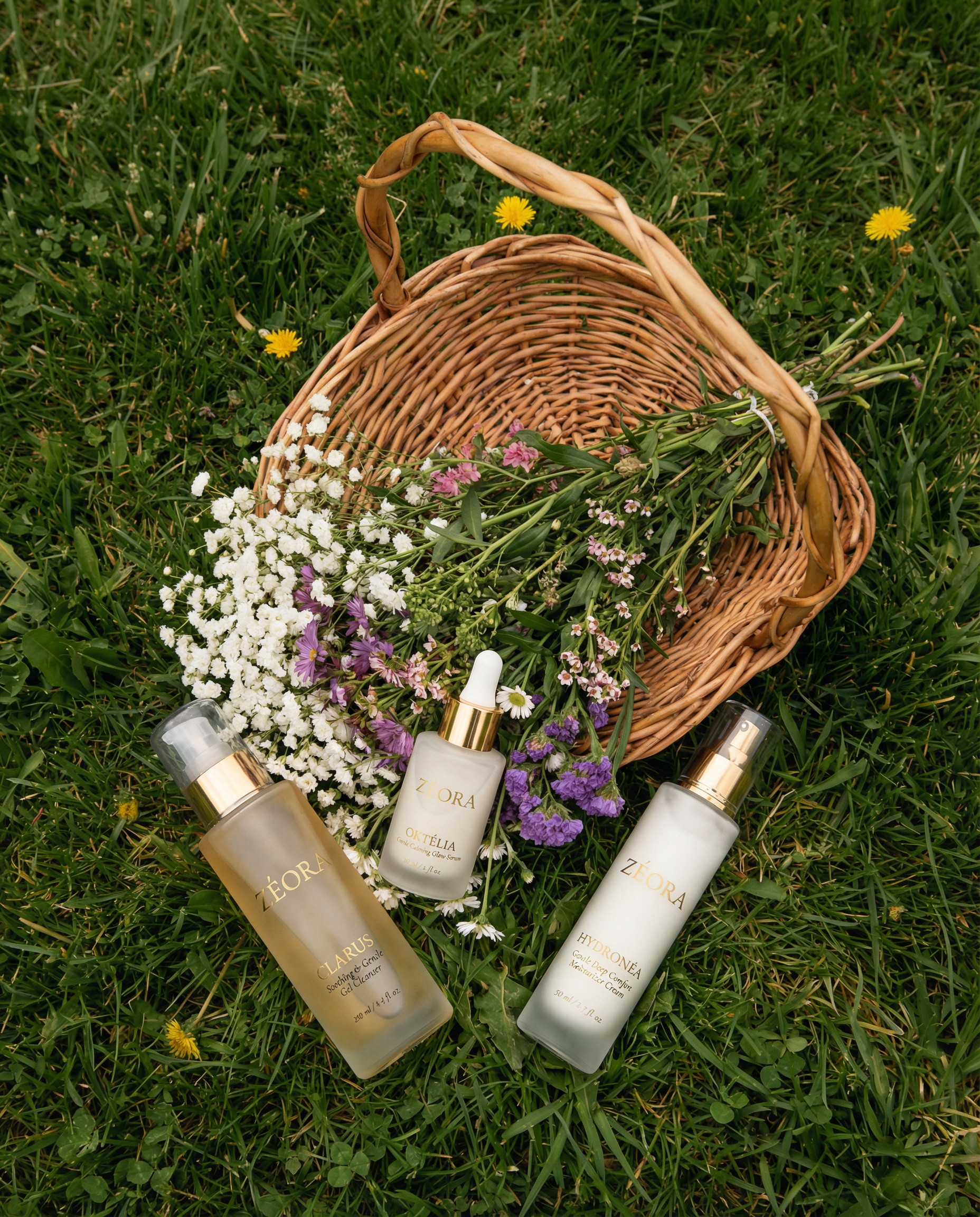
- Oktélia, our lightweight serum (30 ml). It's the only ZÉORA product with evodia.
Oktélia is step two of The ZÉORA Ritual, between Clarus, our gentle gel cleanser (100 ml), and Hydronéa, our replenishing cream (50 ml).
How to use the Ritual
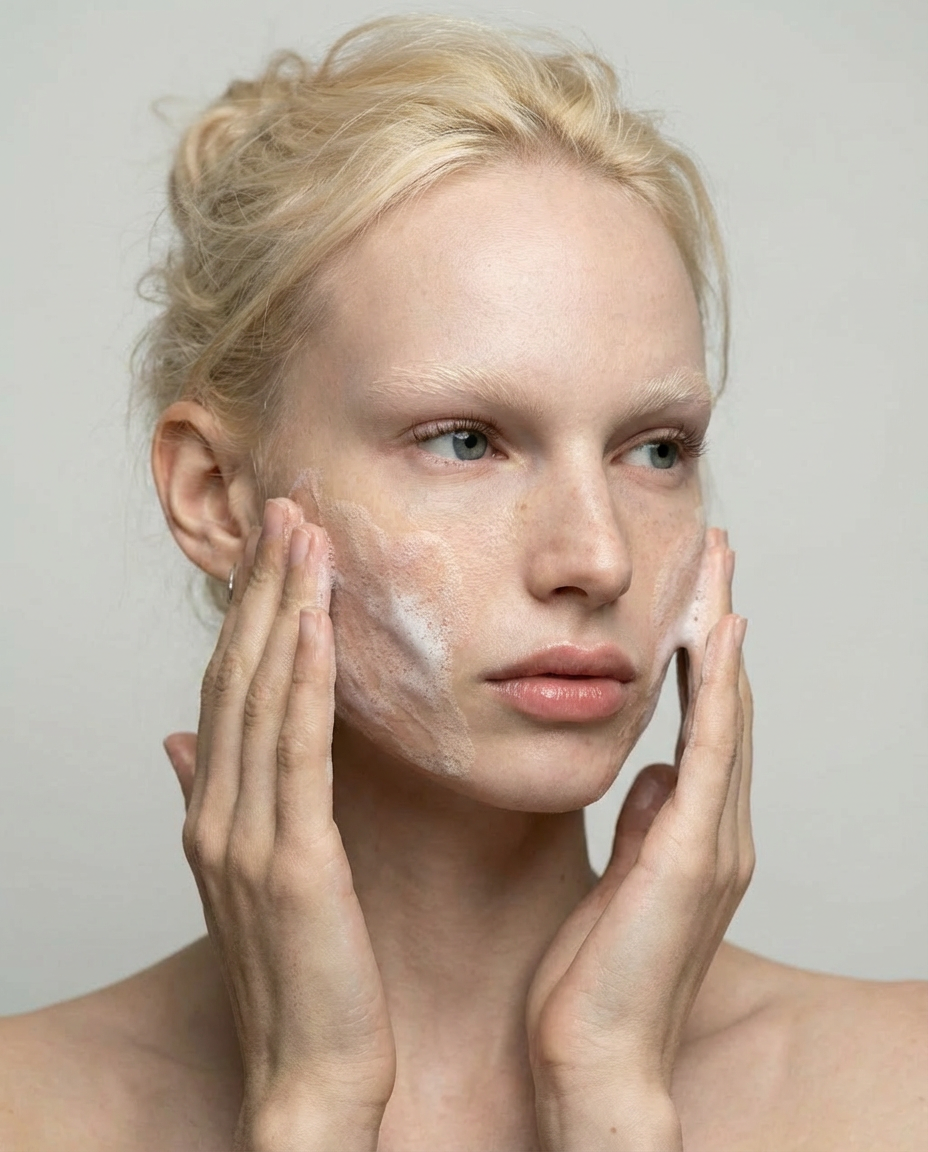
- Cleanse. Massage 1–2 pumps of Clarus onto damp skin for a few seconds, rinse lightly and pat dry.
- Calm. Apply 3 drops of Oktélia, one on the forehead and one on each cheek, and spread until absorbed.
- Restore. Smooth Hydronéa evenly over clean skin to seal in hydration.
Use the routine morning and evening. Hydronéa does not contain SPF, so in the morning finish with a broad-spectrum sunscreen you already tolerate.
If your skin is sensitive, introduce one new product at a time and patch-test first. The American Academy of Dermatology explains how to test a skincare product before using it on your face. Like any plant ingredient, evodia isn't right for everyone, and some people may react to it.
Keep reading
- Damask Rose for Sensitive Skin: The Rose in Every ZÉORA Step
- Sage for Sensitive Skin: The Mediterranean Herb in Every ZÉORA Step
- Aloe Vera for Sensitive Skin: Why It's Ingredient #2 in ZÉORA
- Yarrow for Sensitive Skin
This article is general skincare information, not medical advice. ZÉORA products are cosmetics, not medicines. If you have a skin condition, or notice persistent redness, itching, swelling or a rash, please speak with a board-certified dermatologist before changing your routine.