If you have sensitive skin and you have been trying to work out what keeps triggering it, fragrance is the first place to look.
It is the most common cause of contact dermatitis and skin sensitisation in skincare. It is present in the majority of products, including many marketed as gentle, natural, or suitable for sensitive skin.
And most people with reactive skin have never been told this.
What fragrance actually is in skincare
Fragrance in skincare is not a single ingredient. It is a category and it encompasses hundreds of different chemical compounds.
On an ingredient list, it appears under several names:
- "Fragrance" or "parfum": synthetic fragrance blend
- "Natural fragrance": derived from plant sources but still potentially sensitising
- Essential oils: lavender, rose, citrus, and others (which are technically natural but frequently irritating)
- Specific fragrance chemicals: linalool, limonene, citronellol, geraniol (which must be listed individually above certain concentrations in some regions)
The word "natural" does not mean safe for sensitive skin. Many of the most sensitising fragrance compounds come from entirely natural sources.
What fragrance does to a compromised skin barrier
When your skin barrier is intact, it can manage brief exposure to many ingredients without significant reaction. When it is compromised, as it typically is in sensitive, reactive, or sensitized skin- the picture changes.
Here is what happens when a compromised barrier encounters fragrance:
- Fragrance molecules penetrate the barrier more deeply than intended.
- The immune system registers them as foreign and mounts a response: redness, stinging, inflammation.
- Over repeated exposure, the skin becomes increasingly sensitized, not just to fragrance, but to other ingredients that the barrier would previously have tolerated.
This is why people with sensitive skin so often find that their skin becomes more reactive over time, not less. Each fragrance exposure adds to a cumulative sensitisation response that lowers the threshold for future reactions.
Why "natural" fragrance is not a safe alternative
One of the most common misconceptions in clean beauty is that natural fragrance is safer than synthetic fragrance for sensitive skin.
The evidence does not support this. Essential oils, particularly citrus-derived, floral, and spiced variants are among the most common causes of allergic contact dermatitis in skincare users. Rose oil, lavender oil, and bergamot are all well-documented sensitizers.
For skin that is already reactive, the source of the fragrance is largely irrelevant. What matters is whether the skin barrier can tolerate it and for most sensitized skin, it cannot.
How to check your products
Read the ingredient list from top to bottom. Ingredients are listed in descending order of concentration, so position matters.
Look for: fragrance, parfum, natural fragrance, essential oils (by name), and individual fragrance chemicals such as linalool, limonene, or geraniol.
If any of these appear in the first half of the ingredient list, the concentration is high enough to be a meaningful skin concern.
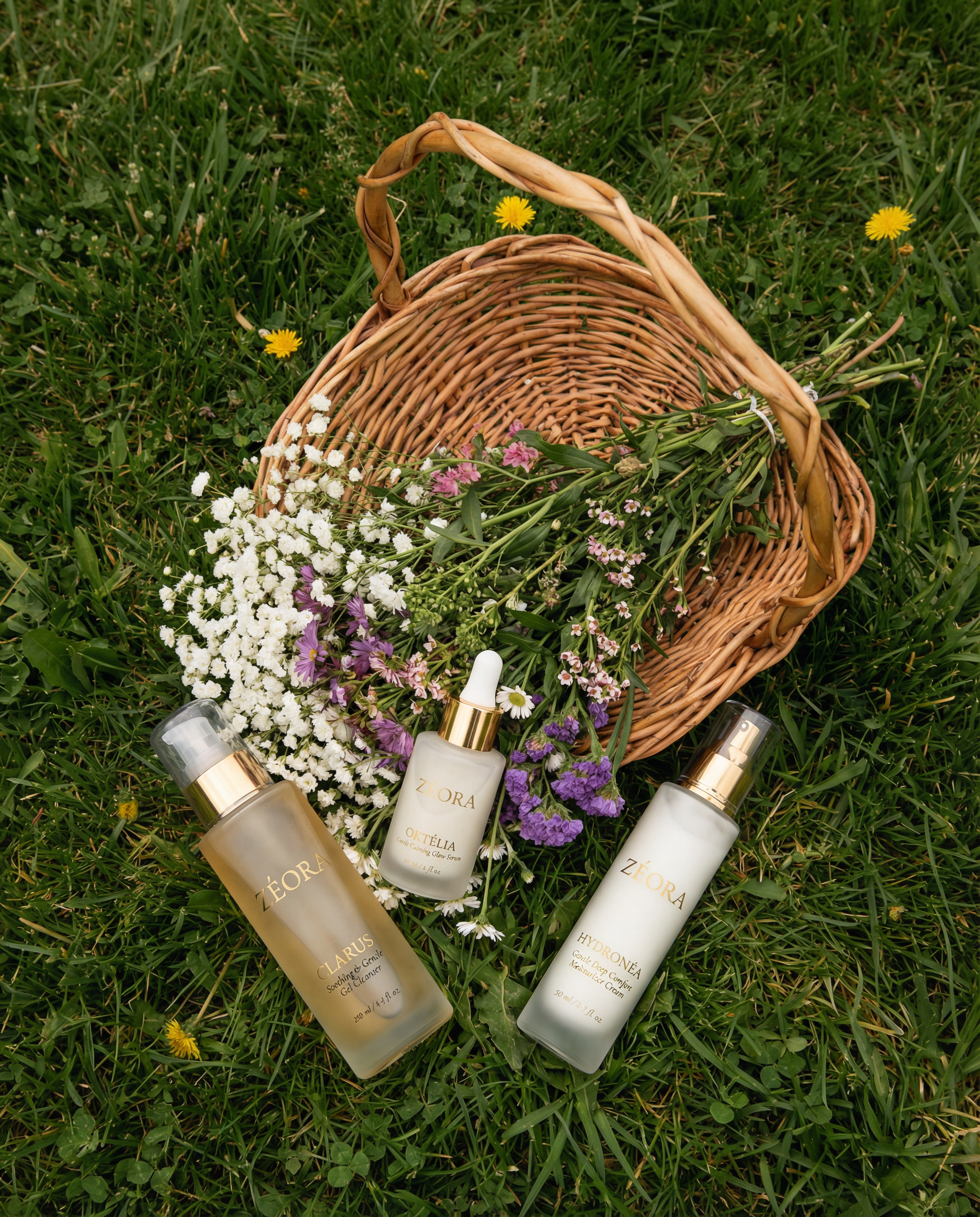
Why ZÉORA contains no fragrance
ZÉORA is completely fragrance-free. Not as a marketing claim. Not because it is a trend. Because it is the only responsible choice for a formula designed specifically for sensitive and sensitized skin.
Every ingredient in ZÉORA earns its place through function, calming inflammation, restoring the barrier, supporting long-term skin resilience. Nothing is added for scent.