If your skin stings when you apply products it used to tolerate, feels tight an hour after cleansing, or seems to flush at the slightest change in weather, you have probably searched for how to repair your skin barrier. It's one of the most common questions in skincare, and one of the most over-complicated.
Supporting your skin barrier is often less about adding things and more about taking them away. Here's what the barrier is, the signs it may need some care, and a simple routine to help your skin feel more comfortable.
What your skin barrier actually does
The skin barrier is the outermost layer of your skin, known as the stratum corneum. Dermatologists often describe it as a brick wall. The bricks are flattened skin cells called corneocytes. The mortar holding them together is a mix of lipids, mainly ceramides, cholesterol and fatty acids (Del Rosso and Levin, Journal of Clinical and Aesthetic Dermatology).
When that wall is intact, it does two jobs well. It helps hold water in, so skin feels hydrated and supple. And it helps keep everyday irritants out, so skin is less likely to feel reactive.
When the barrier is under stress, from harsh cleansing, too many strong products, dry weather, or simply how your skin is built, water escapes more easily and skin can feel dry and tight. Products that never bothered you before may suddenly sting. That's one reason skin can start to feel "sensitive" when its barrier is having a hard time.
Signs of a damaged skin barrier
There's no single test you can do at home, but these signs often show up together:
- Tightness after cleansing, even with a gentle cleanser
- Stinging or burning when you apply serums or moisturizers you used to tolerate
- Dryness or flaking that doesn't improve much with more moisturizer
- Visible redness or a blotchy look, especially after washing
- Skin that feels both oily and dehydrated at the same time
- A sense that your skin is unpredictable: fine one day, upset the next
A note before you start: this article is general skincare information, not medical advice. If you notice persistent redness, a rash, swelling, cracking, or itching that doesn't settle, please see a board-certified dermatologist. These can be signs of a skin condition that needs a professional diagnosis, and no cosmetic routine replaces that.
Common habits that stress the barrier
Most barrier stress comes from good intentions. The usual culprits:
- Over-cleansing. Dermatologists suggest washing your face once in the morning and once at night, and after heavy sweating (American Academy of Dermatology). Washing more than that, or using a harsh cleanser that leaves skin feeling "squeaky", puts extra stress on the barrier. Overwashing and harsh cleansers are among the habits a dermatology review lists to avoid (Del Rosso and Levin).
- Too many strong products at once. Exfoliating acids, retinoids and high-strength vitamin C can all have a place in skincare. But some ingredients, such as retinol and glycolic acid, can irritate skin, particularly sensitive skin (American Academy of Dermatology). Layered together, or introduced all at once, they can overwhelm it.
- Scrubbing. Grainy scrubs, rough washcloths and cleansing brushes add friction your skin doesn't need. The American Academy of Dermatology recommends applying cleanser with your fingertips, because a washcloth or mesh sponge can irritate skin, and resisting the temptation to scrub.
- Constantly switching products. Every new product is a new set of ingredients for your skin to get used to. When you change everything at once, it's also impossible to tell what's helping and what isn't.
- Environment. Cold wind, dry indoor heating, air-conditioning and time in the sun can all leave skin feeling drier.
A simple skin barrier routine
A barrier-friendly routine has four parts, and it's shorter than you might expect.
Step 1: Cleanse gently
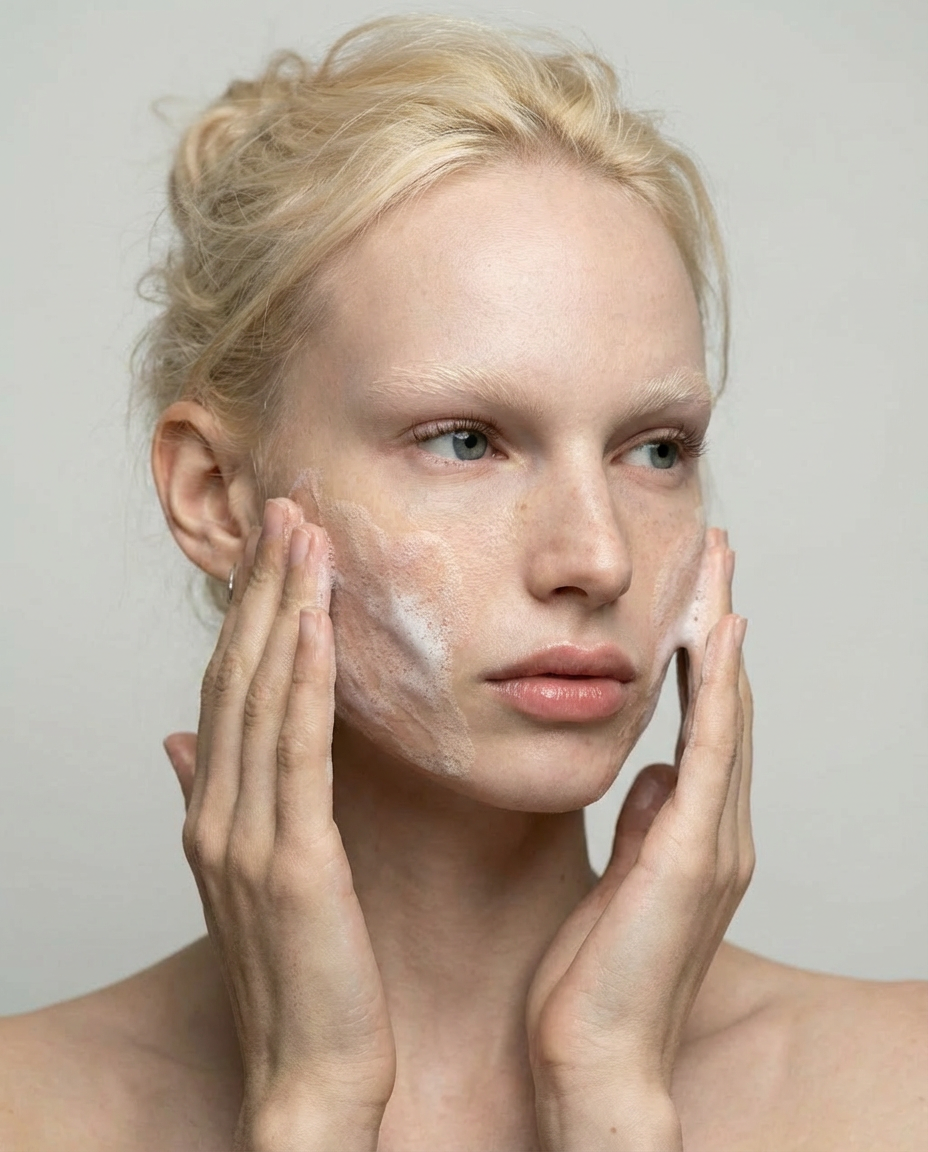
Choose a gentle, non-abrasive cleanser. Wet your face with lukewarm water, apply the cleanser with your fingertips, massage gently without scrubbing, then rinse and pat dry with a soft towel (American Academy of Dermatology). If your skin feels tight afterwards, your cleanser may be too strong for you, or you may be washing more often than you need to.
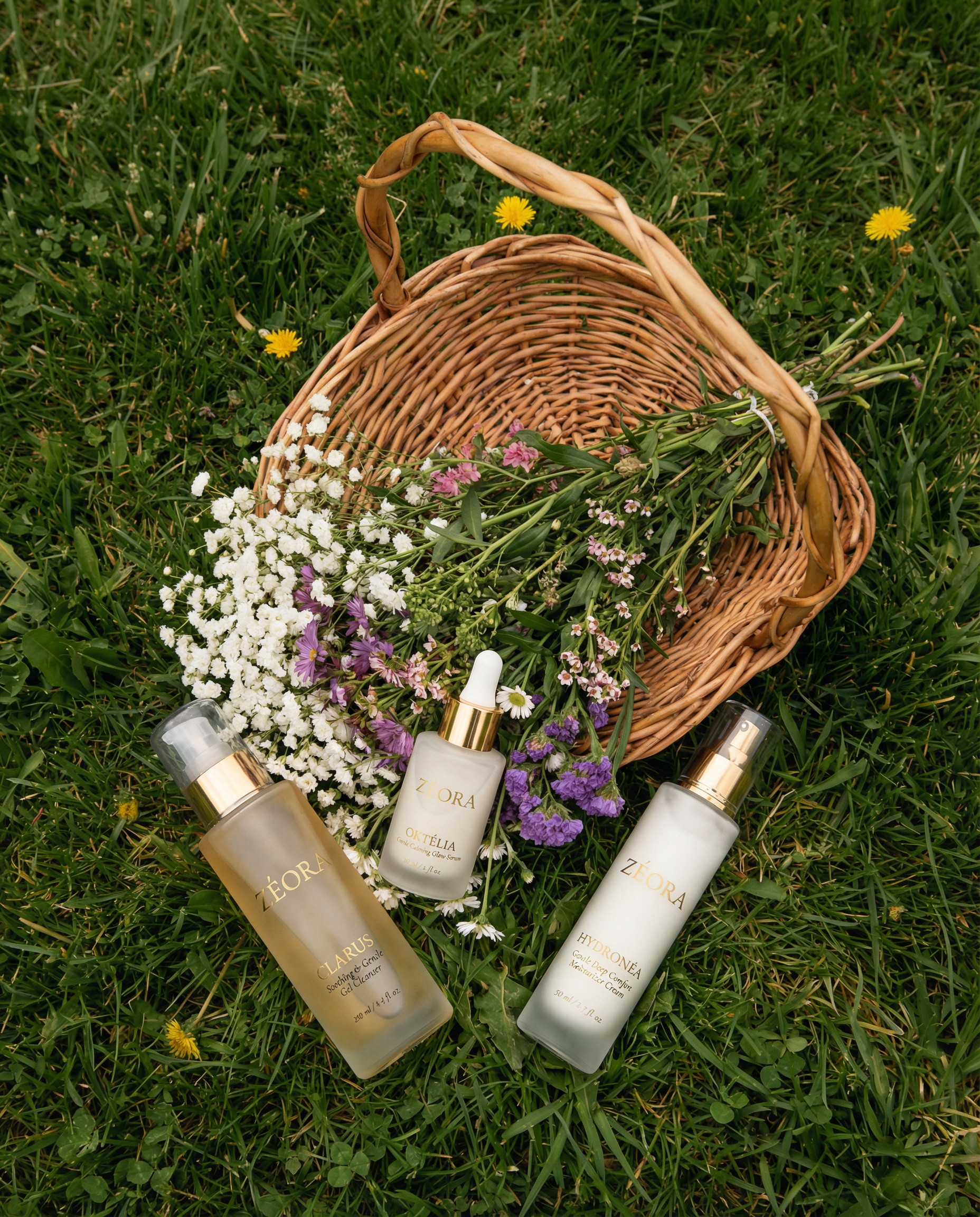
In the ZÉORA Ritual, this is Step 1 — Clarus · Cleanse: Clarus, a silky gel cleanser with aloe leaf juice and glycerin that lifts the day's buildup without leaving skin feeling stripped. Use 1–2 pumps on damp skin, morning and evening.
Step 2: Hydrate
Humectants are ingredients that attract water to the skin's surface. Look for sodium hyaluronate (a form of hyaluronic acid) or glycerin. Apply them to clean skin, morning and evening.
Step 2 — Oktélia · Calm: Oktélia, a lightweight serum with sodium hyaluronate and glycerin, plant oils such as sweet almond and grape seed, and botanical extracts including chamomile and evodia fruit. Apply 3 drops, one on the forehead and one on each cheek, and spread gently until absorbed.
Step 3: Moisturize
A moisturizer does two things: it softens skin (emollients such as plant oils and shea butter) and it helps reduce water loss from the surface (occlusives such as dimethicone). If your skin feels tight, a cream is usually more comfortable than a light lotion.
Step 3 — Hydronéa · Restore: Hydronéa, a replenishing cream with panthenol, bisabolol, jojoba and sweet almond oils, and dimethicone. It helps skin hold on to moisture and supports the skin barrier.
Step 4: Sunscreen (morning)
Finish every morning with a broad-spectrum sunscreen of SPF 30 or higher (American Academy of Dermatology). Hydronéa doesn't contain SPF, so sunscreen is its own step.
That's it: three steps at night, four in the morning. If you're using strong actives, consider pausing them while your skin settles and reintroducing them one at a time, with your dermatologist's advice if you're unsure.
What to look for in a moisturizer when your barrier feels stressed
If you've been searching for a "barrier repair moisturizer", the ingredient list tells you more than the label on the front. Ingredients commonly used in moisturizers include:
- Humectants: glycerin, sodium hyaluronate, sorbitol, panthenol
- Emollients: plant oils (jojoba, sweet almond, grape seed), shea butter, fatty alcohols such as cetyl alcohol
- Occlusives: dimethicone, waxes
- Lipids: ceramides, cholesterol and fatty acids (found in some formulas)
Texture matters too. Choose something you'll be happy to apply twice a day, because you're more likely to use it consistently.
Whatever you choose, read the full ingredient list, especially if you know your skin reacts to specific ingredients, and patch test before using it on your face. The American Academy of Dermatology suggests applying a new product to a quarter-sized spot, such as the underside of your arm or the bend of your elbow, twice a day for 7 to 10 days. For a wash-off product like a cleanser, leave it on for about five minutes, or as long as the instructions say. If your skin reacts, wash it off and stop using it (How to test skin care products).
How long does it take to repair the skin barrier?
The honest answer: it depends, and there's no fixed timeline. Your skin is constantly renewing its outer layer, and the barrier needs time to settle once the things stressing it are gone.
Your skin may feel more comfortable fairly soon after you simplify your routine, simply because you've stopped doing the things that bothered it. Changes in how skin looks usually take longer, and everyone's skin is different. Try not to judge a new routine too quickly: give it a few weeks of consistent, gentle use, and see a board-certified dermatologist if your skin isn't settling.
Two things tend to slow things down: changing products every week, and going back to harsh habits the moment your skin feels better.
Small habits that can help
- Keep showers short and use warm rather than hot water.
- Pat skin dry with a soft towel instead of rubbing.
- Apply moisturizer while your skin is still slightly damp.
- Use a humidifier in dry or heated rooms.
- Introduce one new product at a time, and let your skin settle before adding the next.
- Wash your face after heavy sweating, but otherwise stick to morning and night.
FAQ
Can my skin barrier recover overnight?
No. Skin can feel more comfortable quickly once you stop over-cleansing or over-exfoliating, but supporting the barrier is a gradual process.
Should I stop using retinol or acids?
If your skin is stinging or flaking, many people find it helps to pause strong actives and reintroduce them slowly. If a dermatologist prescribed yours, ask them before pausing or changing it.
Is a damaged skin barrier the same as sensitive skin?
Not exactly. Some people's skin is naturally more sensitive, and a stressed barrier can make any skin feel sensitive. A gentle, simple routine is a sensible starting point either way, and a dermatologist can help you tell the difference.
Do I need a lot of products to support my barrier?
Usually not. A gentle cleanser, a hydrating step, a moisturizer and morning sunscreen cover the essentials.
The ZÉORA approach
The ZÉORA Ritual was inspired by a notebook kept in 1850 on the Greek island of Samos by Zéora, a woman with reactive, sensitive skin. Her guiding principle was restraint. Our ritual follows the same idea: three formulas, used in the same order morning and evening, so your skin has fewer surprises to deal with.
Every ZÉORA product page lists its full ingredient list, so you can check each one before you start, and you can read why each botanical is there on our Ingredient Intelligence page. We recommend patch testing each product first.
Related reading: What Is the Skin Barrier and Why Does It Break Down? and A Minimal Skincare Routine for Reactive Skin.
Build your barrier-first routine with The ZÉORA Ritual →
Sources
- Del Rosso JQ, Levin J. The Clinical Relevance of Maintaining the Functional Integrity of the Stratum Corneum in both Healthy and Disease-affected Skin. Journal of Clinical and Aesthetic Dermatology, 2011; 4(9): 22–42.
- American Academy of Dermatology. Face washing 101.
- American Academy of Dermatology. How to select a sunscreen.
- American Academy of Dermatology. How to test skin care products.
This article is general skincare information, not medical advice, and isn't a substitute for advice from a board-certified dermatologist.