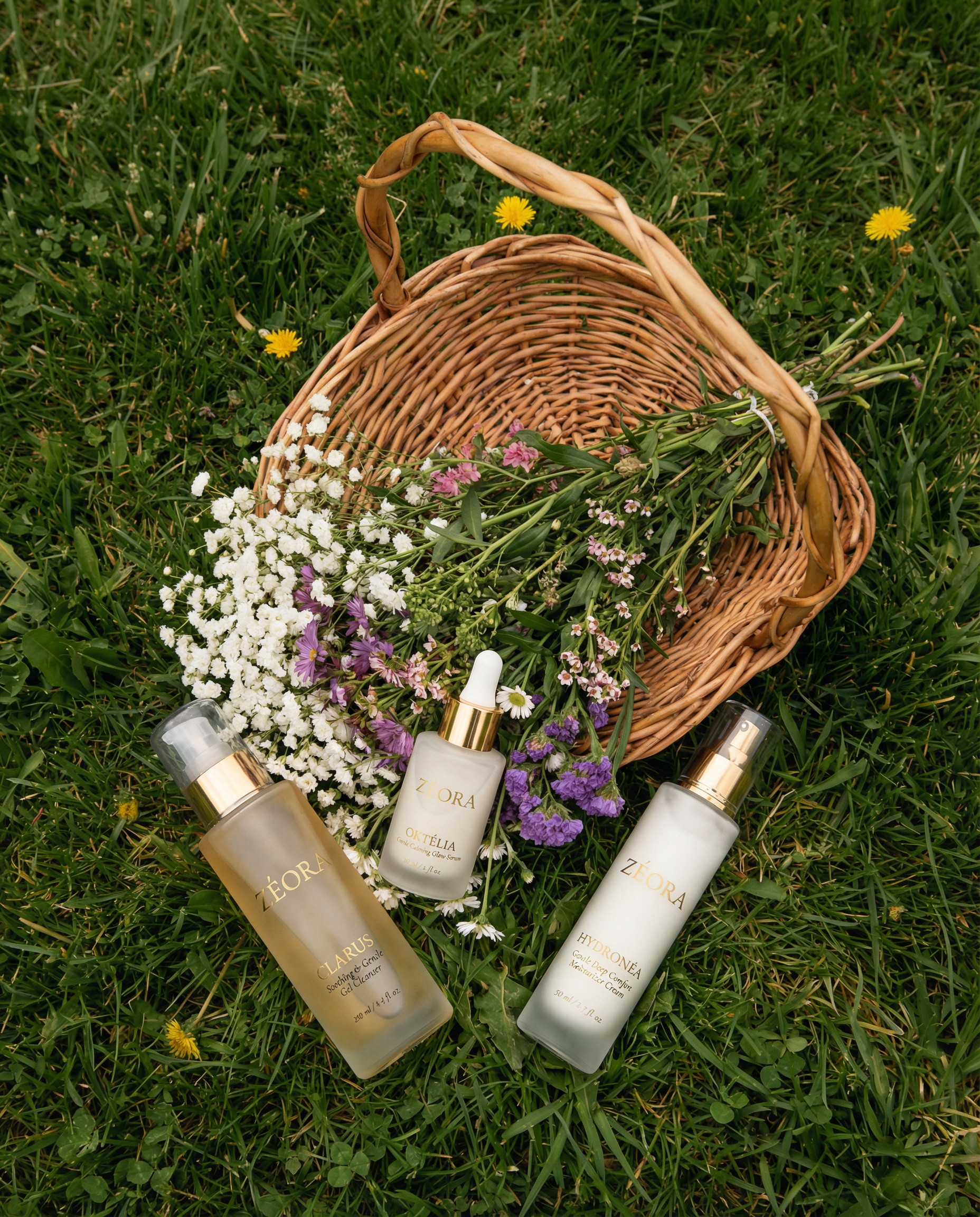
Most cleansers are judged by what they remove. Clarus, the first step of the ZÉORA Ritual, also contains three sugar-derived ingredients that work on the other side of the equation: Xylitylglucoside (ingredient #5), Anhydroxylitol (#7) and Xylitol (#9). Together they're often described as a xylitol "sugar complex". Oktélia and Hydronéa don't contain it.
Here's what these ingredients are, what published research says about them (and what it doesn't), and why they're in a cleanser.
What the xylitol complex is
Xylitol is a sugar alcohol (a polyol). Anhydroxylitol is a related compound derived from xylitol, and xylitylglucoside combines xylitol with glucose. Like glycerin, which also appears in Clarus (#4), polyols are humectants: ingredients that attract and hold water.
In Clarus they sit alongside a mild cleansing agent, sodium lauroyl sarcosinate, and aloe vera juice (#2). They're one part of the formula, not a stand-alone "hero".
What research says
The studies below tested xylitol or the xylitol complex in research formulations. None is a test of Clarus or any ZÉORA product, and a rinse-off cleanser is a different situation from a leave-on gel or cream.
- Glycerol and xylitol on dry skin. In a 2017 study, 12 volunteers with dry skin applied a formulation with 5% glycerol and 5% xylitol to one arm area twice daily for 14 days, compared with vehicle and untreated areas. The authors report higher skin hydration and filaggrin, lower transepidermal water loss and improved biomechanical properties. It was a small study of a leave-on formula. (Korponyai et al., 2017)
- The xylitol complex in a hydrogel. A 2009 study measured skin moisture in eight women after applying gels containing different moisturizing actives, including the xylitylglucoside, anhydroxylitol and xylitol complex. The urea gel and the complex gel showed the most intense moisture effect over six hours. (Leite e Silva et al., 2009)
- Lab research on barrier recovery. A 2019 laboratory study in an epidermal-equivalent model suggests xylitol may interact with skin lipids in a way linked to faster barrier recovery after disruption. This is lab work, not a study in people. (Umino et al., 2019)
Why it's in Clarus
Sensitive skin often feels tight after washing. Pairing a mild cleansing agent with humectants like glycerin and the xylitol complex is a formulation choice meant to help skin stay hydrated while you cleanse. We describe it that way and no further: we're not claiming a clinical result for Clarus itself.
A note for sensitive skin
Any new product can react differently on different skin. Patch-test first, following the American Academy of Dermatology's guide, and stop if you notice irritation.
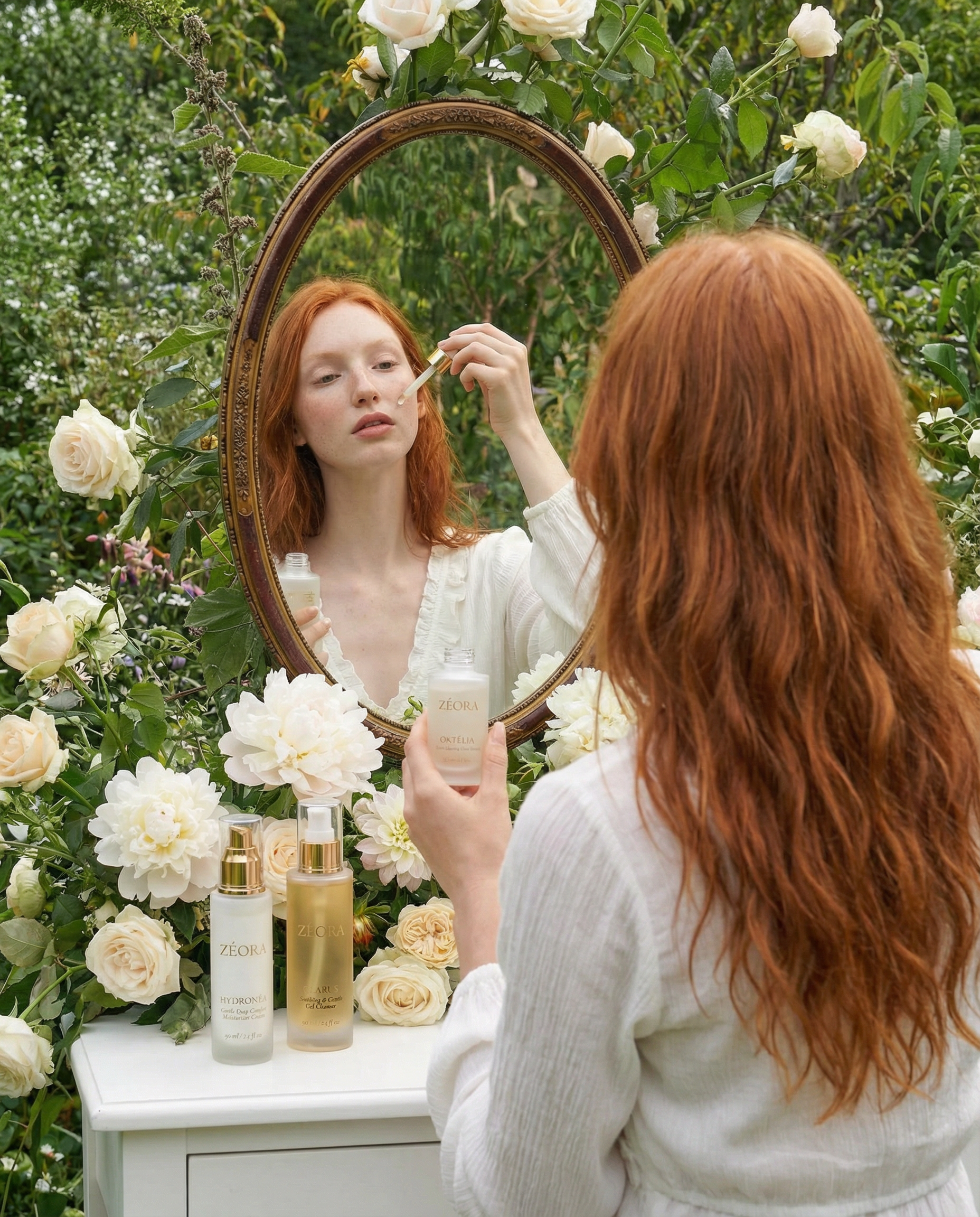
Clarus is step one of the ZÉORA Ritual, followed by Oktélia and Hydronéa. Read more in the Journal: aloe vera and panthenol.
Keep reading
- Vitamin E for Sensitive Skin: The Antioxidant in Oktélia & Hydronéa
- Lavender for Sensitive Skin: The Purple Flower in Clarus
- Calendula for Sensitive Skin: The Marigold Flower in Clarus
This article is general skincare information, not medical advice. ZÉORA products are cosmetics, not medicines. If you have a skin condition, or notice persistent redness, itching, swelling or a rash, please speak with a board-certified dermatologist before changing your routine.