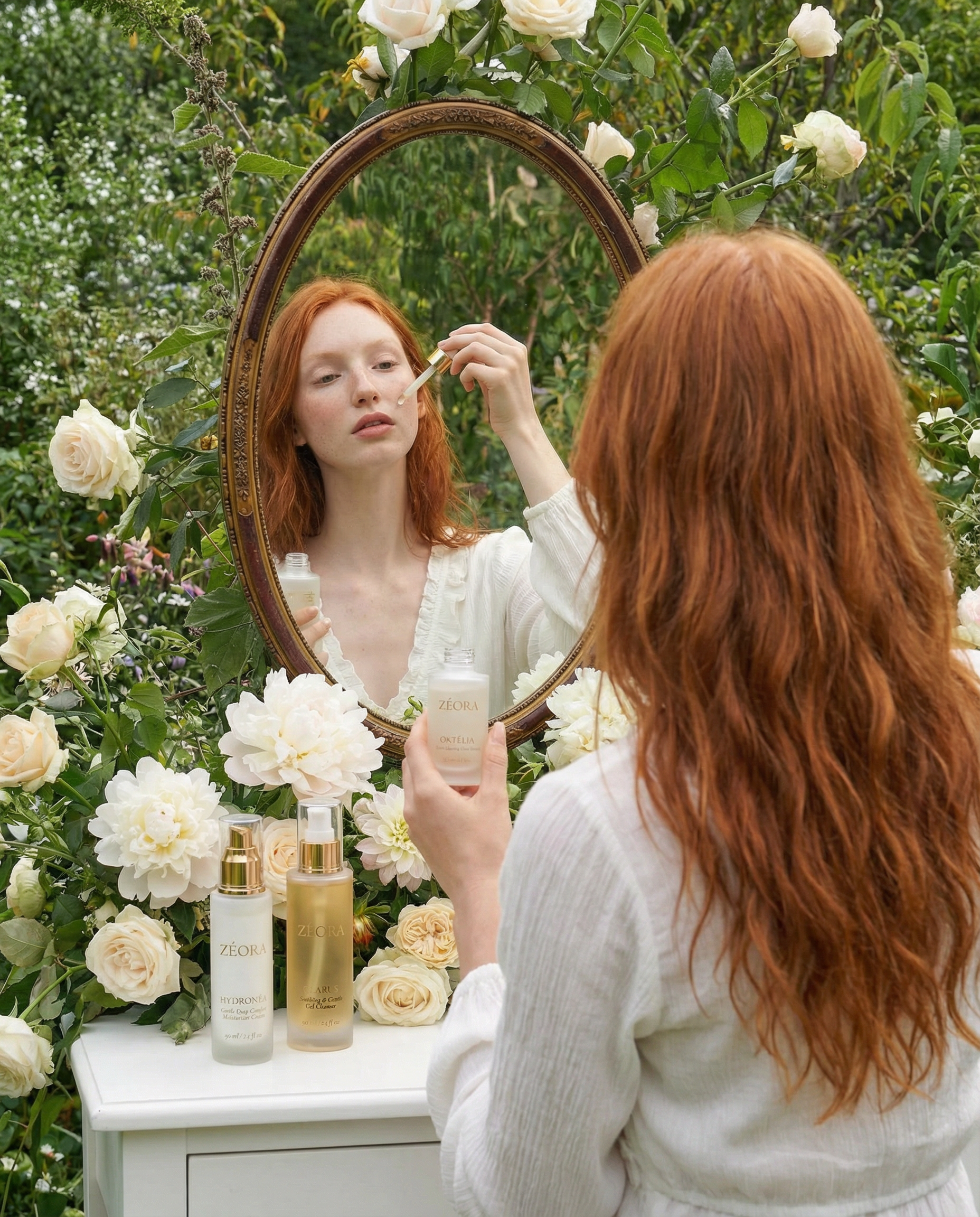
Most of the ZÉORA Ritual shares one Samos Garden of botanicals across every step. Clarus, our cleanser, adds a few flowers of its own, and one of them is Lavender, the purple-flowered Mediterranean shrub. In the Ritual you'll find it only in Clarus.
Here's what lavender is, what published research says about it (and what it doesn't), and why it sits in the first step of the Ritual.
What lavender is
Lavender (Lavandula angustifolia), sometimes called true or English lavender, is a small evergreen shrub native to the mountains of the Mediterranean, from Spain to France and Italy. It belongs to the mint family (Lamiaceae), the same plant family as sage, lemon balm and marjoram, three of the herbs in every ZÉORA step. On skincare labels it appears as Lavandula Angustifolia (Lavender) Flower Extract, an extract made from the flowers.
Lavender is best known for its scent. Its essential oil is rich in aromatic compounds, mainly linalool and linalyl acetate, and the plant also contains phenolic compounds such as anthocyanins and flavones.
What research says about lavender in skincare
It's worth being precise here, because most lavender research is about its essential oil, which is a much more concentrated material than a flower extract in a cleanser.
- A long history in cosmetics. A 2023 review in Plants follows lavender from field to finished product. It describes lavender oil and flowers being used in perfumes, massage oils, soaps, shampoos and other personal care products, and notes that L. angustifolia is the species preferred for perfumery and cosmetics. The authors also note that lavender oil is considered one of the mildest plant essential oils, while still advising dilution when it's used on skin (Plants, 2023).
- Why freshness matters. A 2008 study in Contact Dermatitis left lavender oil exposed to air and tracked how it changed. Its main scent compounds, including linalool and linalyl acetate, oxidized over time, and the air-exposed oil became more likely to cause skin sensitization in laboratory tests. In patch tests, people already allergic to oxidized linalool also reacted to the air-exposed lavender oil (Contact Dermatitis, 2008).
Neither paper tested ZÉORA products, and neither studied a flower extract in a rinse-off cleanser. The research helps explain why lavender is such a familiar cosmetic botanical, and why some people with sensitive skin choose to avoid it, not how it performs in a finished formula on your skin.
Why lavender is in Clarus
ZÉORA began with a notebook from 1850, kept by a woman named Zéora on the Greek island of Samos. She had reactive, sensitive skin and studied the plants around her, keeping only what her skin accepted. Today's Ritual carries that idea forward with a small group of gentle botanicals in every step.
Clarus, our 100 ml gel cleanser, is built on aloe vera, which comes right after water on its ingredient list. Lavender sits near the end of its botanical extracts, after green tea, damask rose, chamomile, calendula, sage and lemon balm, and before Greek-sourced yarrow (Achillea millefolium) and marjoram. Ingredients are listed in order of concentration, so it's a small supporting part of the cleanser rather than its main base.
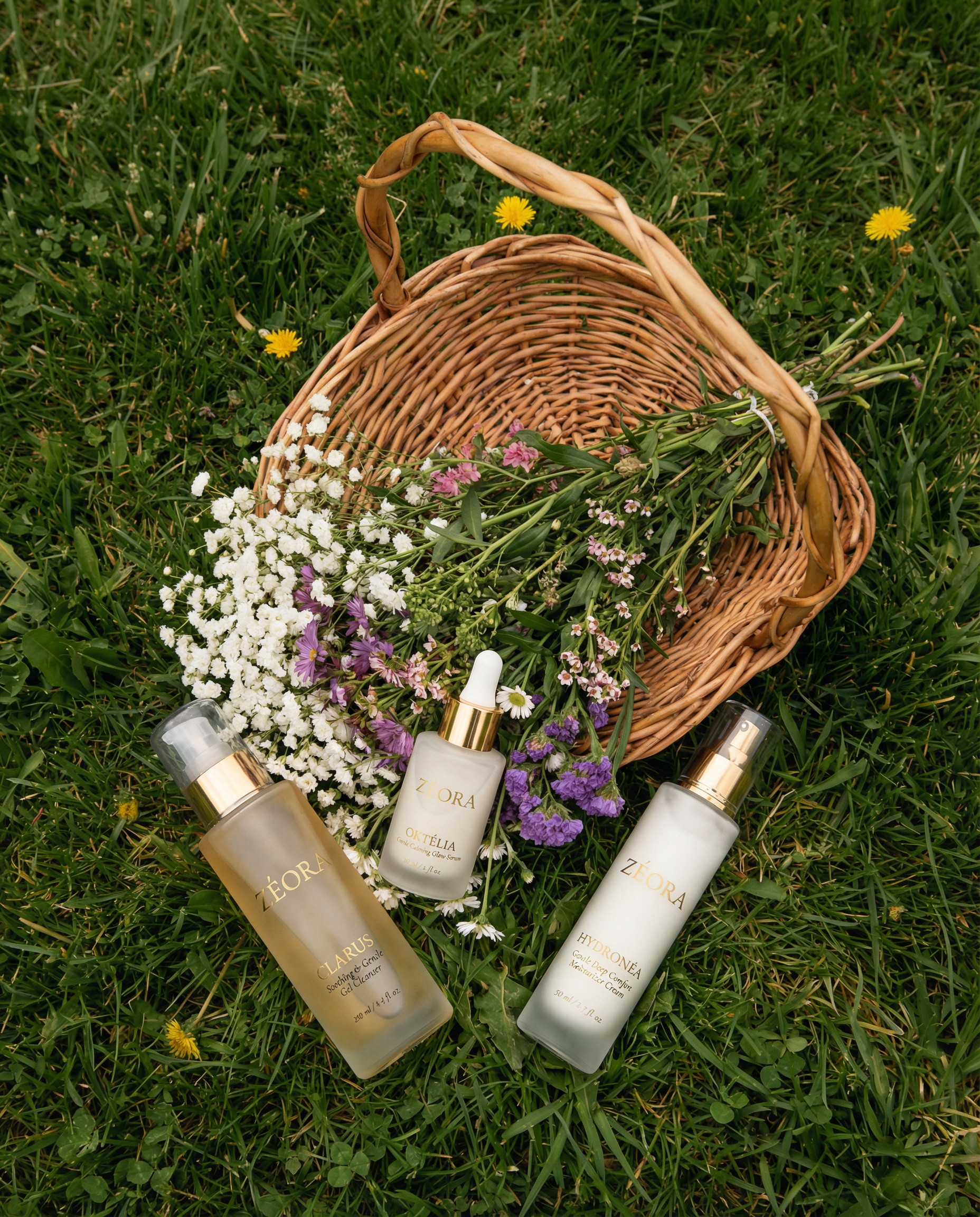
Neither Oktélia, our serum, nor Hydronéa, our cream, contains lavender, so Clarus is the step that brings it into the Ritual.
Where Clarus fits in the Ritual
The ZÉORA Ritual has three steps, used morning and evening:
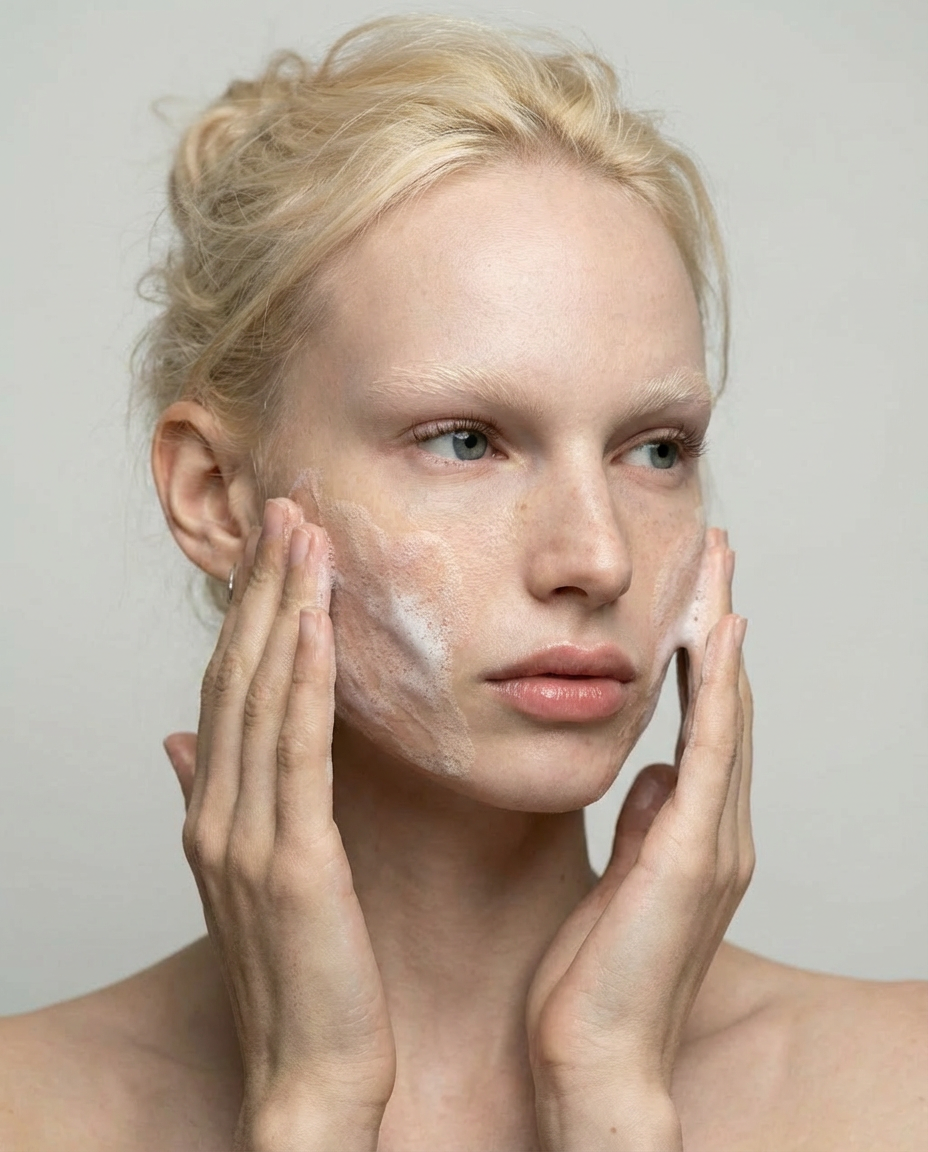
- Clarus · Cleanse, the gel cleanser with lavender. Massage 1–2 pumps onto damp facial skin for a few seconds, rinse lightly and pat dry.
- Oktélia · Calm, the serum.
- Hydronéa · Restore, the cream that finishes the routine.
Hydronéa doesn't contain SPF, so in the morning finish with a sunscreen of your choice.
A note for sensitive skin
Hydronéa is our fragrance-free step. Clarus and Oktélia do contain fragrance. Lavender's scent compounds, especially linalool, are known to cause skin reactions in some people, so if you know you react to lavender or linalool, please check with your doctor before trying Clarus. Every full ingredient list is on its product page, so you can check each one before you buy.
If your skin is sensitive, introduce one new product at a time and patch-test first. The American Academy of Dermatology explains how to test a skincare product before using it on your face.
For a simple look at everyday skin barrier support, see our guide for sensitive skin.
Keep reading
- Calendula for Sensitive Skin: The Marigold Flower in Clarus
- Sweet Marjoram for Sensitive Skin: The Herb in Every ZÉORA Step
- Sage for Sensitive Skin: The Mediterranean Herb in Every ZÉORA Step
- The Samos Garden: 7 Botanicals in Every ZÉORA Step
This article is general skincare information, not medical advice. ZÉORA products are cosmetics, not medicines. If you have a skin condition, or notice persistent redness, itching, swelling or a rash, please speak with a board-certified dermatologist before changing your routine.