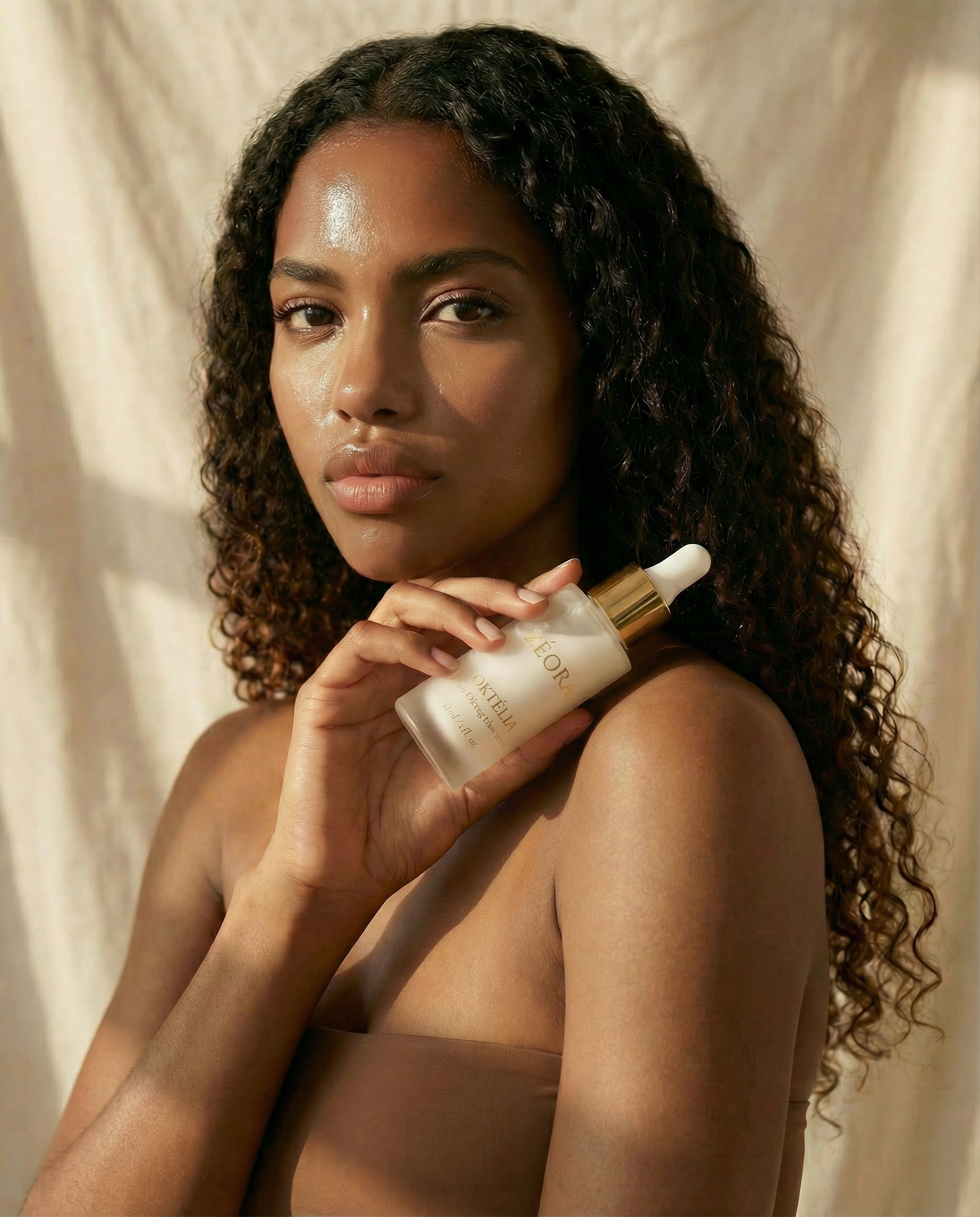
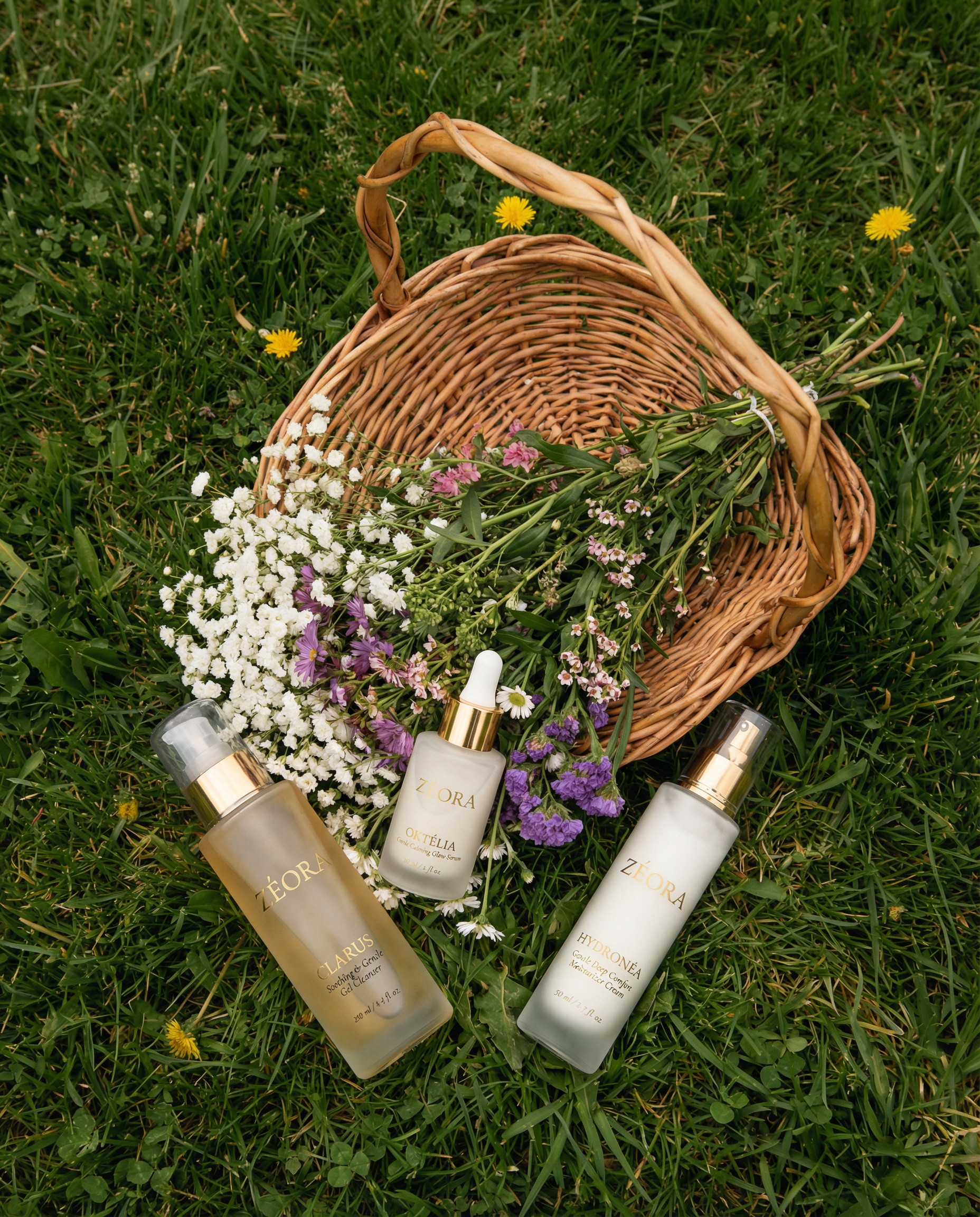
Two of the three steps in the ZÉORA Ritual share a light, golden oil pressed from a very familiar fruit: grape seed oil. You'll find it in Oktélia, our serum, and in Hydronéa, our cream. Clarus, the cleanser, doesn't contain it.
Here's what grape seed oil is, what published research says about it (and what it doesn't), and why it sits in the last two steps of the Ritual.
What grape seed oil is
Grape seed oil is pressed from the small seeds of the wine grape (Vitis vinifera), the vine that has been grown around the Mediterranean, from Greece to Italy and France, for thousands of years. The seeds are left over after grapes are pressed for wine and juice, so the oil is a by-product of the harvest rather than a crop of its own. On skincare labels it appears as Vitis Vinifera (Grape) Seed Oil.
Compared with richer plant butters, grape seed oil is light and spreads easily, which is why it's often used where a formula needs softness without a heavy feel.
What research says about grape seed oil
It's worth being precise here, because much of the research on grapes looks at seed extracts taken as food or supplements, not at an oil used in a serum or cream.
- What's inside the oil. A 2016 review in Nutrition and Metabolic Insights describes grape seed oil as rich in fatty acids, vitamin E (tocopherols) and phenolic compounds, and notes its use across the food, pharmaceutical and cosmetic industries. Most of the effects it discusses come from lab studies, so they don't tell us what the oil does in a skincare product. (Garavaglia et al., 2016)
- Why the type of fatty acid matters. A 2018 review in the American Journal of Clinical Dermatology looked at plant oils used on skin. It explains that the balance of fatty acids is a major factor: oils with a higher ratio of linoleic acid to oleic acid are considered better suited to the skin barrier, while oils high in oleic acid can be harsher on it. Grape seed oil is known as a linoleic-rich oil, although that review focused on other oils, such as sunflower, jojoba and argan. (Vaughn et al., 2018)
What the research doesn't show: we haven't found studies that test grape seed oil on its own in a formula like Oktélia or Hydronéa, so we don't claim a specific result from it. In our formulas it's one part of a blend, there for the soft, comfortable finish it gives the texture.
Where it sits in each formula
Ingredient lists run from the highest amount to the lowest. Grape seed oil is ingredient #18 in Oktélia, after sweet almond oil and shea butter, and ingredient #19 in Hydronéa, where it sits next to vitamin E and jojoba oil. In both, it works alongside the botanicals of the Samos Garden, including Greek-sourced yarrow (Achillea millefolium), sage and damask rose.
How Oktélia and Hydronéa fit in the Ritual
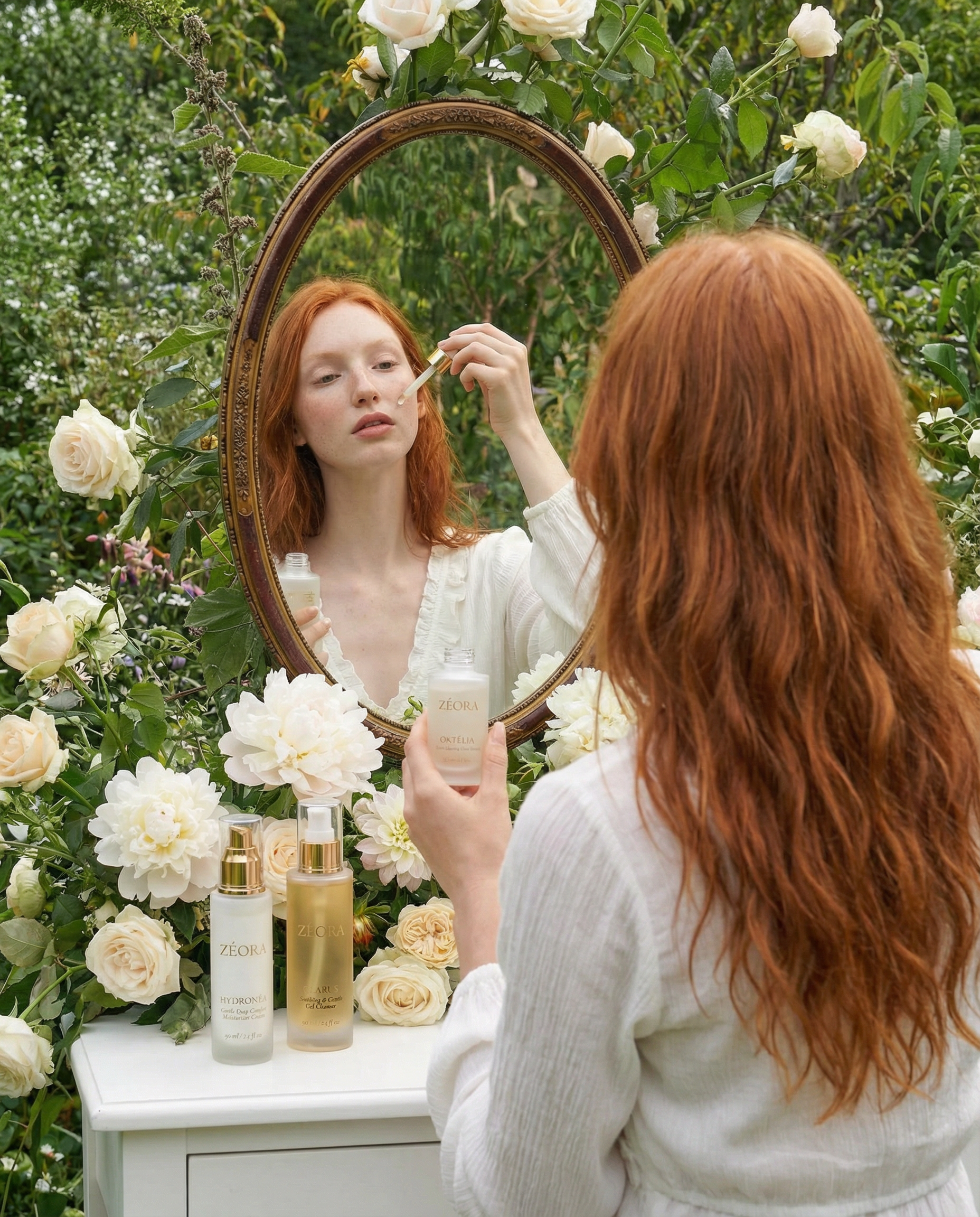
The ZÉORA Ritual has three steps, used morning and evening:
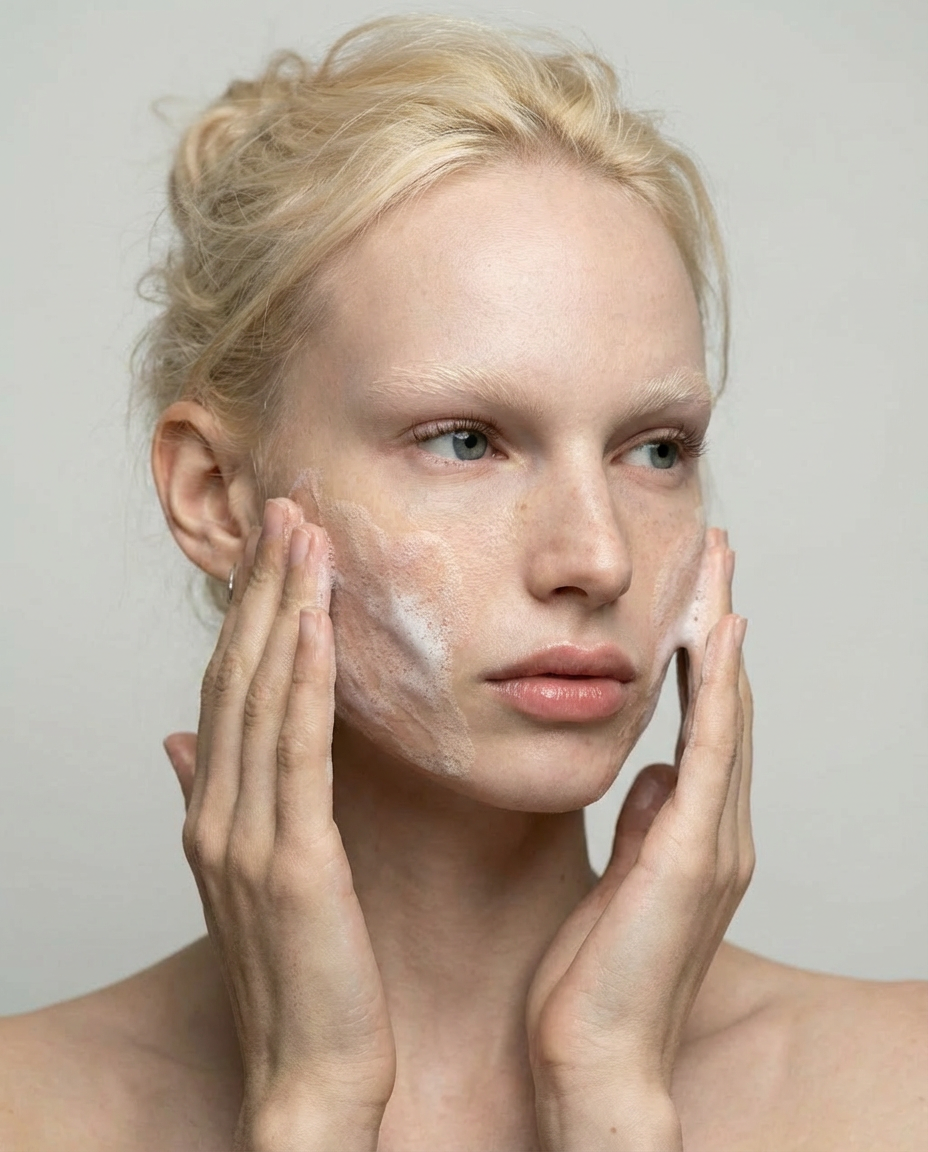
- Clarus · Cleanse, the gel cleanser.
- Oktélia · Calm, the serum with grape seed oil. Apply 3 drops, one on the forehead and one on each cheek, and gently spread until absorbed.
- Hydronéa · Restore, the cream with grape seed oil. Apply evenly to clean facial skin after cleansing.
Hydronéa doesn't contain SPF, so in the morning finish with a sunscreen of your choice.
A note for sensitive skin
Hydronéa is our fragrance-free step. Clarus and Oktélia do contain fragrance. Oktélia and Hydronéa also contain sweet almond oil, so if you have a tree-nut allergy, please check with your doctor first. Every full ingredient list is on its product page, so you can check each one before you buy.
If your skin is sensitive, introduce one new product at a time and patch-test first. The American Academy of Dermatology explains how to test a skincare product before using it on your face.
For a simple look at everyday skin barrier support, see our guide for sensitive skin.
Keep reading
- Sweet Almond Oil for Sensitive Skin: Why It's #2 in Oktélia
- Propolis for Sensitive Skin: The Hive Ingredient in Hydronéa
- Sodium Hyaluronate: The Hydrating Ingredient in Oktélia
- The Samos Garden: 7 Botanicals in Every ZÉORA Step
This article is general skincare information, not medical advice. ZÉORA products are cosmetics, not medicines. If you have a skin condition, or notice persistent redness, itching, swelling or a rash, please speak with a board-certified dermatologist before changing your routine.