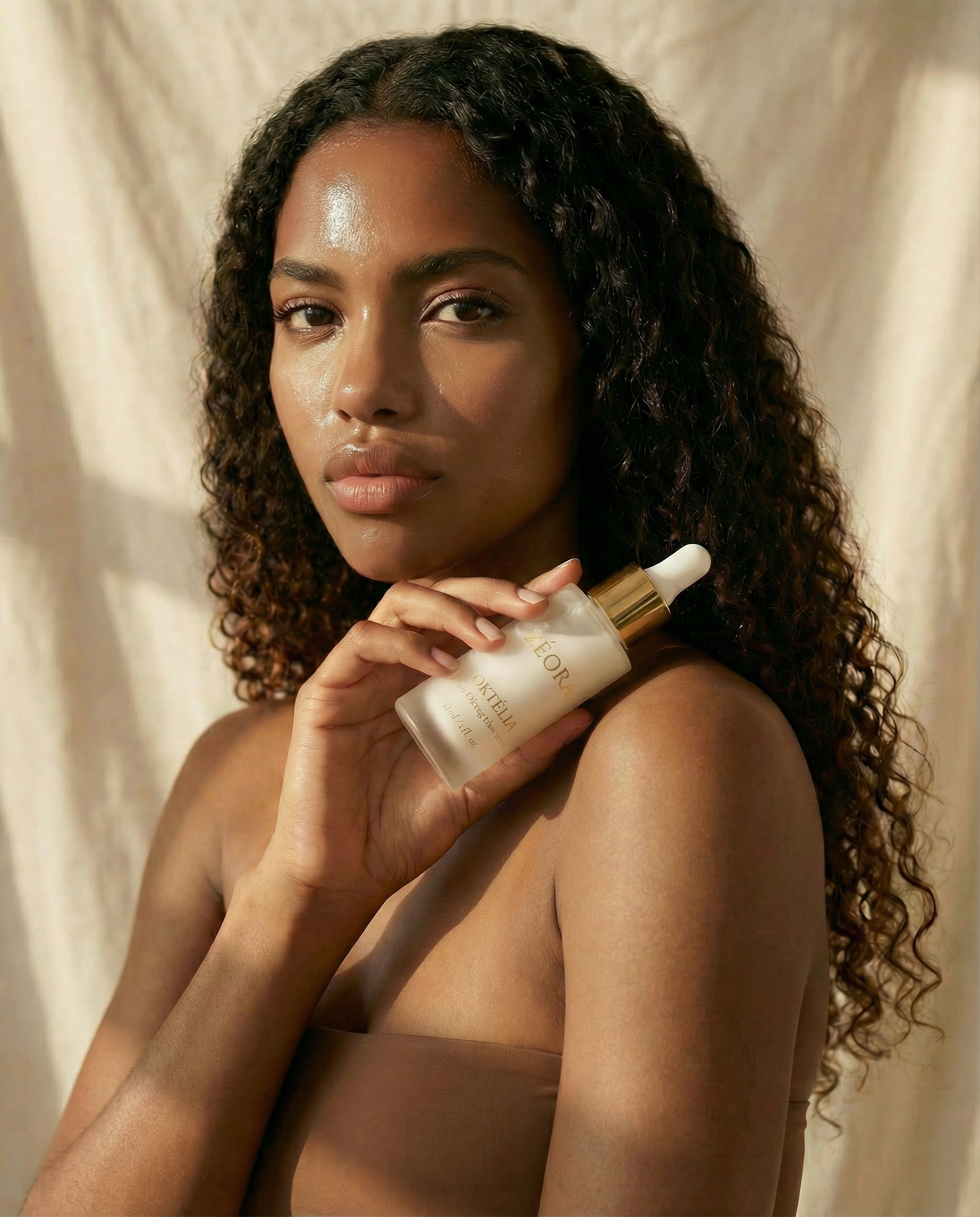
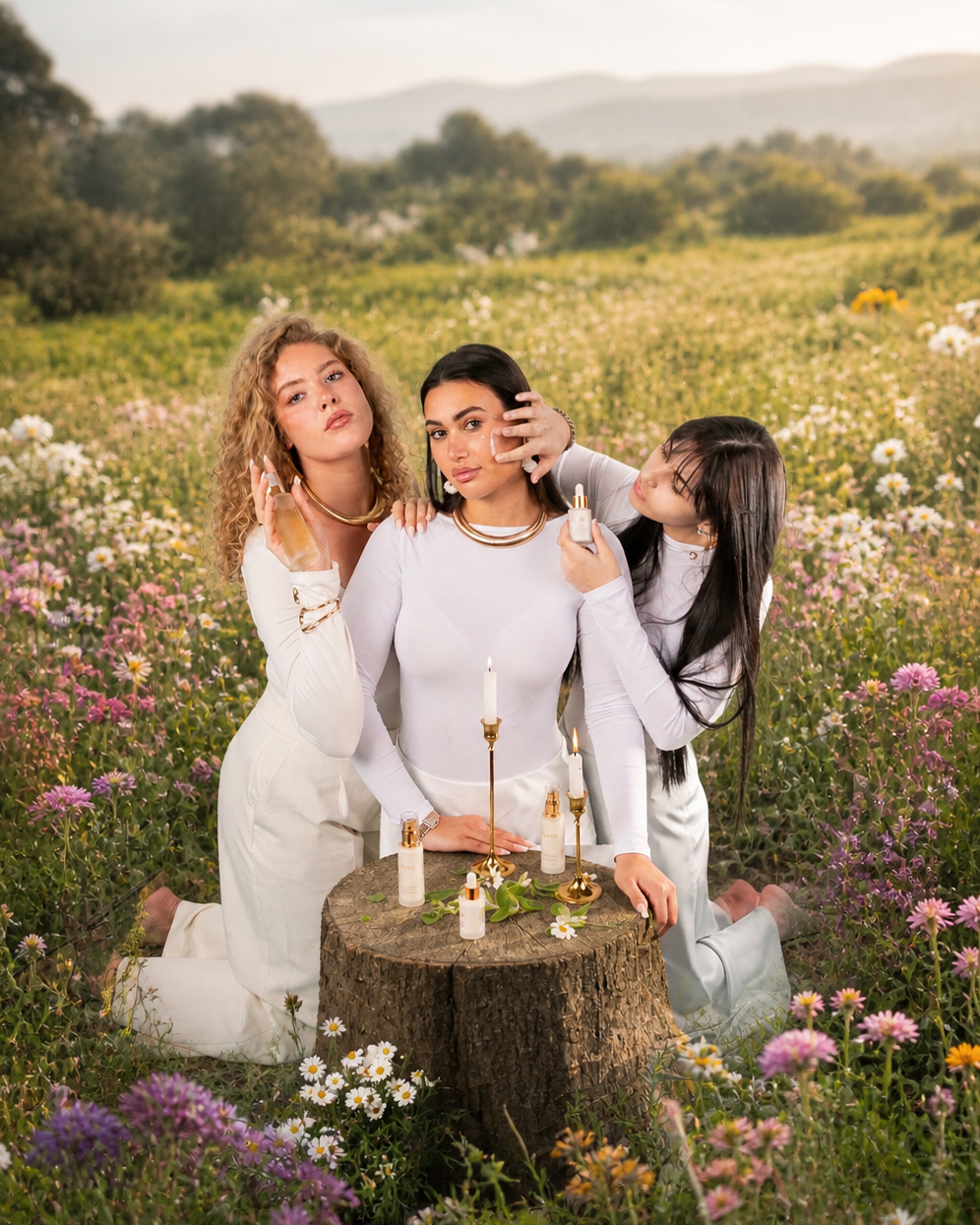
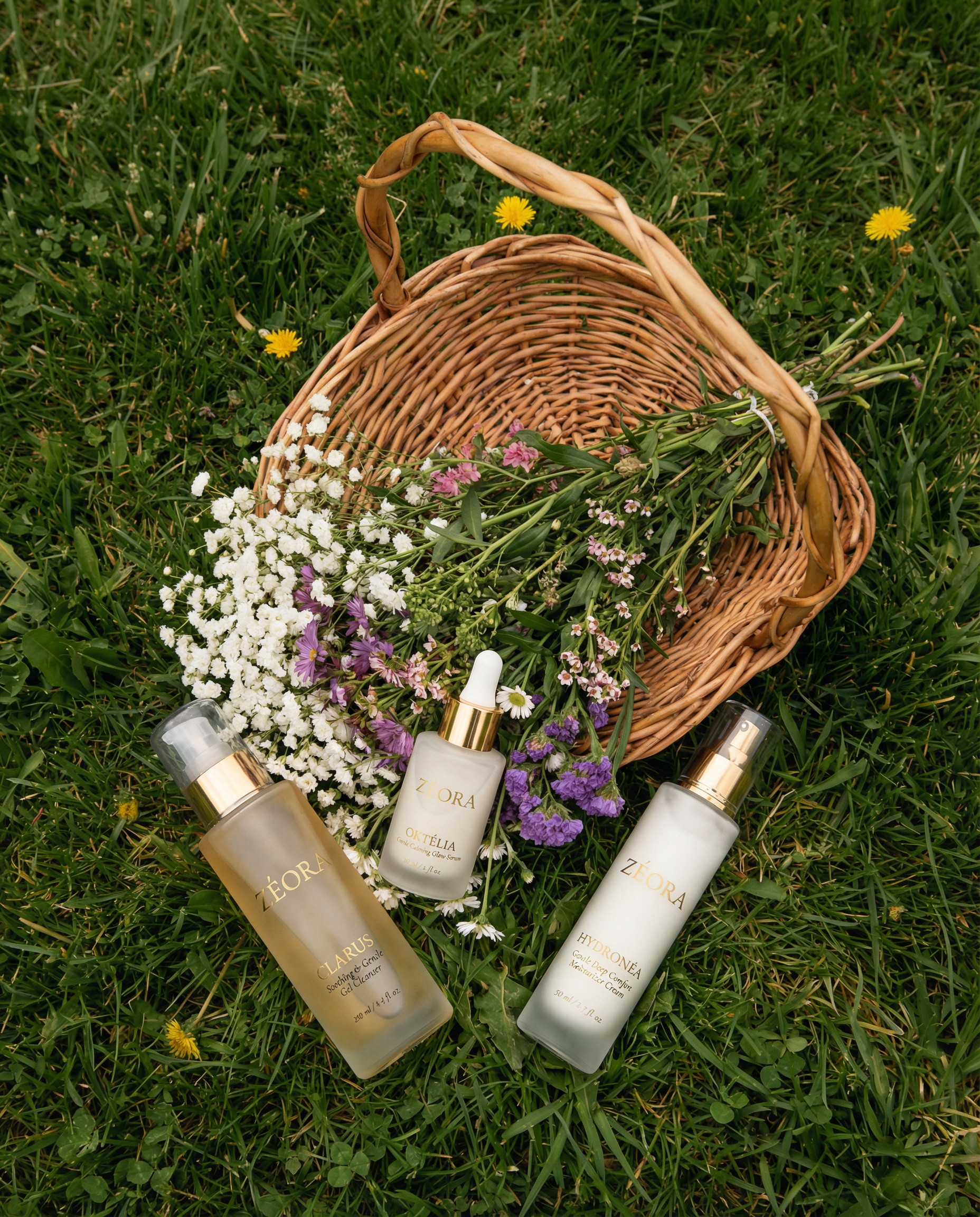
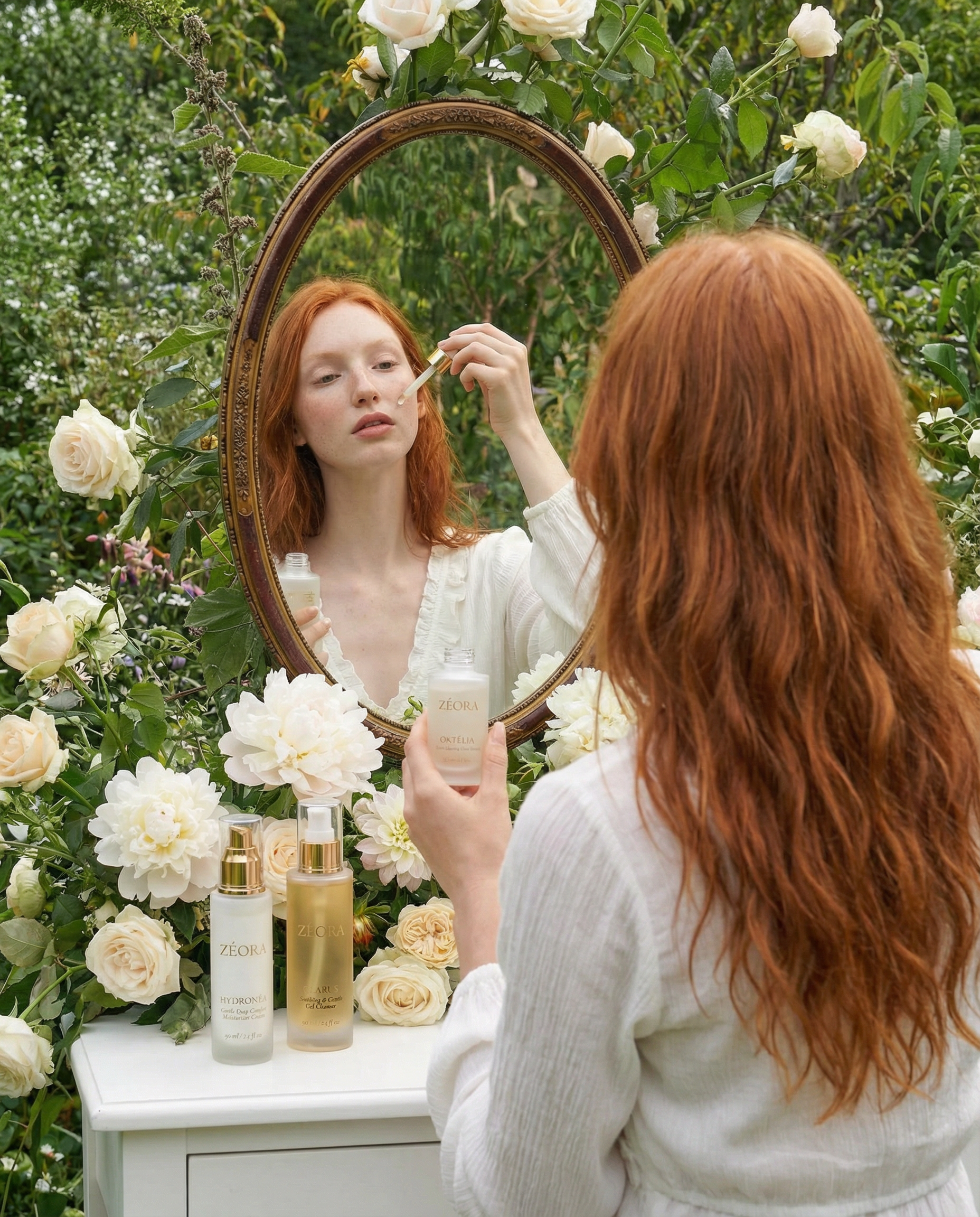
Jojoba oil is often called an oil, but chemically it's closer to a liquid wax. In the ZÉORA Ritual, jojoba oil appears in one step only: Hydronéa, our fragrance-free cream. Clarus, the cleanser, and Oktélia, the serum, don't contain it.
Here's what jojoba oil is, what published research says about it (and what it doesn't), and why it's part of Hydronéa's soft, cushioned finish.
What jojoba oil is
Jojoba oil comes from the seeds of the jojoba shrub (Simmondsia chinensis), which grows in arid regions of the southwestern United States and northwestern Mexico. The seeds are collected and pressed to yield a clear, golden liquid that stays pourable at room temperature. On skincare labels it appears as Simmondsia Chinensis (Jojoba) Seed Oil.
Unlike most plant oils, which are made of triglycerides (three fatty acids attached to a glycerol backbone), jojoba is mainly a mix of long-chain wax esters. That structure is closer to the skin's own surface lipids than a typical seed oil is, which is one reason it spreads easily and feels light rather than heavy or greasy on the face.
Because of that feel, jojoba shows up in many leave-on formulas — creams, lotions and balms — as an emollient. In plain terms, an emollient is an ingredient that helps skin feel softer and smoother. Jojoba helps lock in a soft, moisturized feel when it's part of a cream like Hydronéa, working alongside other lipids and humectants rather than as a stand-alone face oil.
What research says about jojoba oil
It's worth being precise. Reviews of plant oils used on skin often discuss jojoba alongside other oils, but that isn't the same as a trial of jojoba alone in a finished cream like Hydronéa. Two useful papers that do discuss jojoba in a skincare context are below.
- A review of natural oils and the skin barrier. A 2018 review in the American Journal of Clinical Dermatology looked at plant oils used on skin. It explains that the balance of fatty acids is a major factor: oils with a higher ratio of linoleic acid to oleic acid are generally considered better suited to supporting the outer layer of the skin, while oils high in oleic acid can be harsher on it. The review discusses several plant oils used in skin care, including jojoba, and notes that how an oil is extracted and refined also matters — for example, cold-pressed oils keep more of their original lipid profile than heavily processed ones. (Vaughn et al., 2018)
- A 2022 cosmetic-science review of jojoba and two other plant oils. A review in the International Journal of Cosmetic Science updated the evidence on three popular plant oils used in cosmetics — sweet almond, evening primrose and jojoba — and discussed how they are used in formulas aimed at dry or aging skin and in other everyday skin-care contexts. It also covers practical formulation points, such as oxidation risk and how the amount of oil in a product affects texture and stability. This was a literature review of cosmetic uses, not a clinical trial of a ZÉORA product. (Blaak & Staib, 2022)
What the research doesn't show: we haven't found studies that test jojoba oil on its own inside a cream matching Hydronéa's formula, and neither paper above tested a ZÉORA product. So we don't claim a specific result from jojoba alone. In Hydronéa it's one part of a blend, there for the soft, moisturized feel it helps lock in, not as a single "hero" that does all the work.
Where it sits in Hydronéa
Ingredient lists run from the highest amount to the lowest. Jojoba seed oil is ingredient #20 in Hydronéa, right after grape seed oil (#19) and vitamin E (tocopheryl acetate, #18). Nearby on the list are panthenol, bisabolol, propolis wax and sweet almond oil (#3), which sits near the top with aloe vera (#2) and water.
Together with the botanicals of the Samos Garden — including Greek yarrow (Achillea millefolium), sage and damask rose — these ingredients give Hydronéa its comfortable, cushioned feel. Jojoba sits further down the list than sweet almond oil or aloe, so it's a supporting lipid rather than the main bulk of the cream, but it's still part of the blend that leaves skin feeling soft and comforted after application.
How Hydronéa fits in the Ritual
The ZÉORA Ritual has three steps, used morning and evening:
- Clarus · Cleanse, the gel cleanser.
- Oktélia · Calm, the serum. Apply 3 drops, one on the forehead and one on each cheek, and gently spread over the face until fully absorbed.
- Hydronéa · Restore, the cream with jojoba seed oil. Apply evenly to clean facial skin after cleansing.
That order matters for comfort: cleanse first, then serum, then cream. Hydronéa is the leave-on step that sits on top and helps skin feel hydrated and soft through the day or night. Hydronéa doesn't contain SPF, so in the morning finish with a sunscreen of your choice.
A note for sensitive skin
Hydronéa is our fragrance-free step. Clarus and Oktélia do contain fragrance from natural sources. Hydronéa also contains sweet almond oil, so if you have a nut allergy, please check with your doctor first. Every full ingredient list is on its product page, so you can check each one before you buy.
If your skin is sensitive, introduce one new product at a time and patch-test first. The American Academy of Dermatology explains how to test a skincare product before using it on your face.
For a simple look at everyday skin barrier support, see our guide for sensitive skin.
Keep reading
- Grape Seed Oil for Sensitive Skin: The Light Oil in Oktélia & Hydronéa
- Sweet Almond Oil for Sensitive Skin: Why It's #2 in Oktélia
- Propolis for Sensitive Skin: The Hive Ingredient in Hydronéa
- Aloe Vera for Sensitive Skin: Why It's Ingredient #2 in ZÉORA
This article is general skincare information, not medical advice. ZÉORA products are cosmetics, not medicines. If you have a skin condition, or notice persistent redness, itching, swelling or a rash, please speak with a board-certified dermatologist before changing your routine.