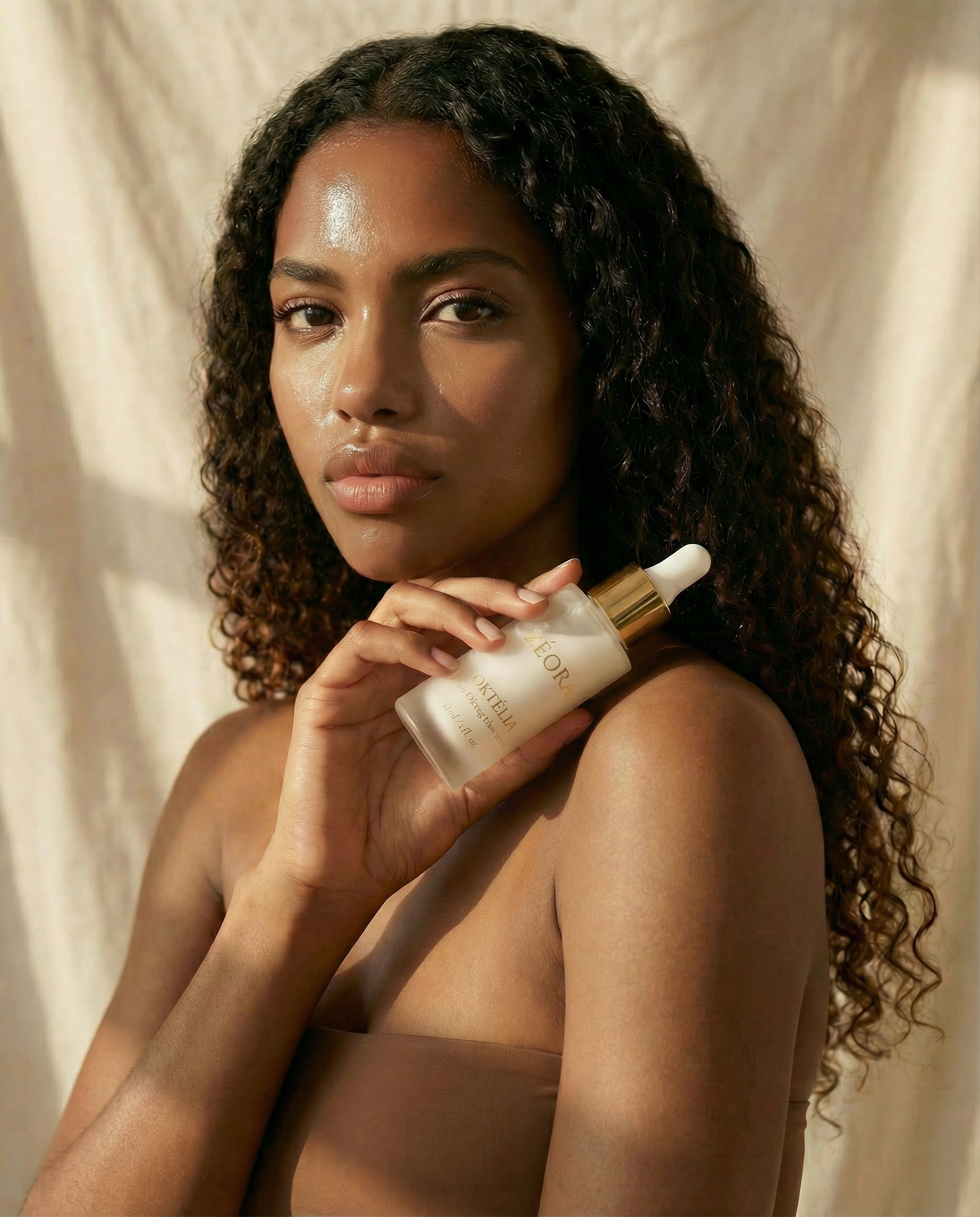
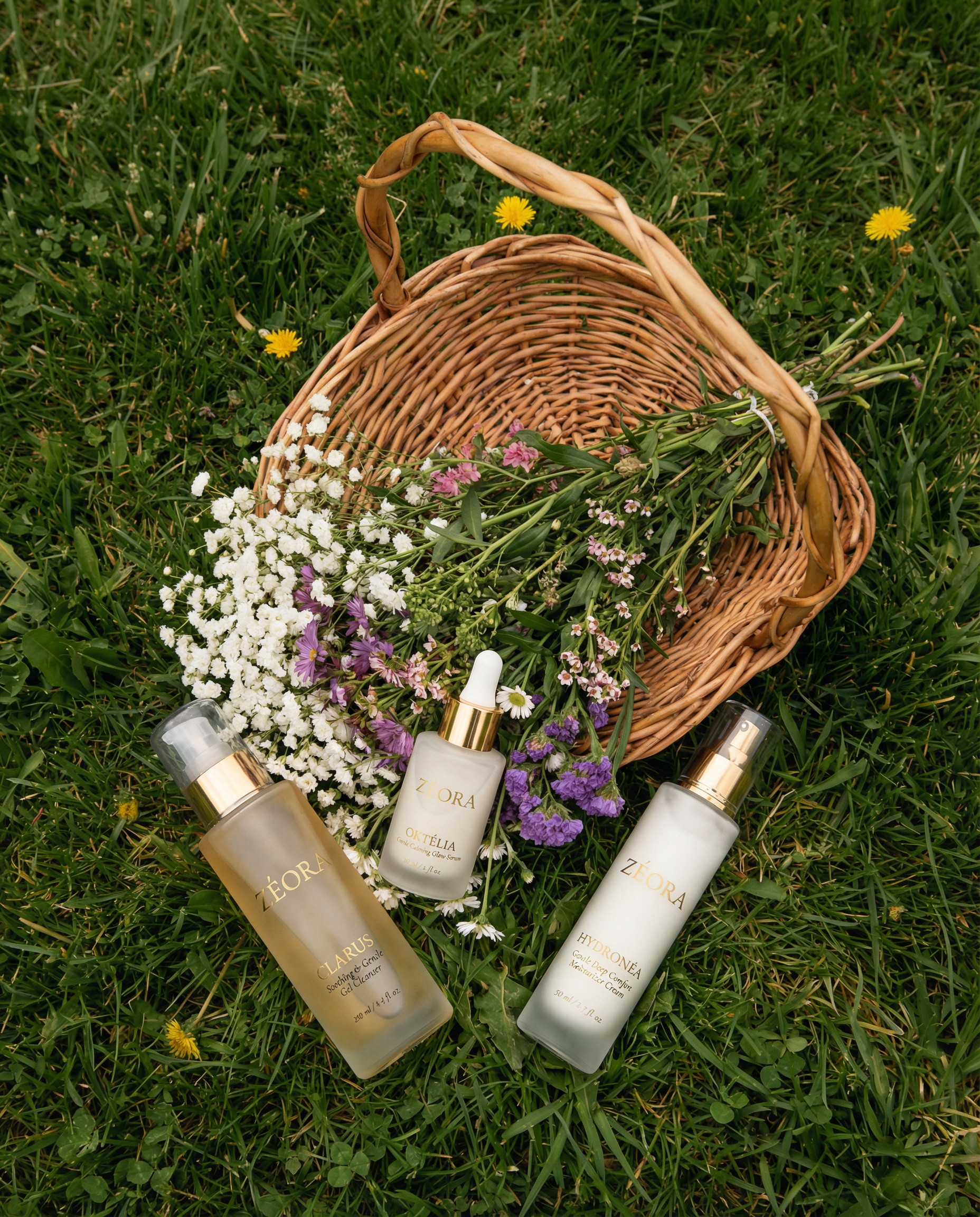
Vitamin E is one of the most familiar names in skincare. In the ZÉORA Ritual it appears on the label as Tocopheryl Acetate, in two steps: Oktélia, the serum (ingredient #12), and Hydronéa, our fragrance-free cream (ingredient #18). Clarus, the cleanser, doesn't contain it.
Here's what tocopheryl acetate is, what published research says about it (and what it doesn't), and why it's part of the formula.
What tocopheryl acetate is
Vitamin E is a fat-soluble antioxidant. Tocopheryl acetate is an ester form of vitamin E: alpha-tocopherol joined to acetic acid. On skincare labels it usually appears as Tocopheryl Acetate, sometimes followed by "(Vitamin E)", which is how it's listed on our product pages.
Because it's oil-soluble, tocopheryl acetate sits naturally alongside the plant oils in Oktélia and Hydronéa, such as sweet almond oil and grape seed oil, both of which appear in each product. It's one part of each blend, not a stand-alone "hero" that does all the work.
What research says about vitamin E on skin
It's worth being precise. The papers below discuss vitamin E and tocopheryl acetate in general dermatology and skincare settings. Neither is a test of Oktélia, Hydronéa, or any ZÉORA product.
- A dermatology review of vitamin E. A 2016 review describes vitamin E as an important fat-soluble antioxidant that has been used in dermatology for more than 50 years and is a common ingredient in cosmetic products. The authors also note a lack of controlled clinical studies defining clear doses and uses. (Keen & Hassan, 2016)
- Eight years of experience with topical tocopheryl acetate. A 2004 paper from Italian authors summarizes their experience with alpha-tocopherol acetate oil applied to skin. They describe the oil's moisturizing effect and lower transepidermal water loss, plus the antioxidant capacity of the alpha-tocopherol released from the ester. This is an experience report on the undiluted oil, not a controlled trial of a finished cream or serum. (Panin et al., 2004)
What the research doesn't show: we haven't found studies that test tocopheryl acetate on its own inside a formula matching Oktélia or Hydronéa, and neither paper above tested a ZÉORA product. So we don't claim a specific result from vitamin E alone. In both products it is one part of a blend.
Where it sits in Oktélia and Hydronéa
Ingredient lists run from the highest amount to the lowest. In Oktélia, tocopheryl acetate is ingredient #12, right after polysorbate 20 (#11) and just before sodium acrylates copolymer (#13). Higher up the same list are sweet almond oil (#2) and shea butter (#6); a little further down come evodia fruit extract (#15) and grape seed oil (#18).
In Hydronéa, tocopheryl acetate is ingredient #18, right after panthenol (#17) and just before grape seed oil (#19) and jojoba seed oil (#20). Sweet almond oil sits near the top of that list at #3.
Both products also carry the botanicals of the Samos Garden, including Greek-sourced yarrow (Achillea millefolium), sage and damask rose. Vitamin E sits mid-list in both formulas, so it's a supporting antioxidant rather than the main bulk of either product.
How it fits the Ritual
The ZÉORA Ritual has three steps, used morning and evening:
- Clarus · Cleanse, the gel cleanser (no vitamin E).
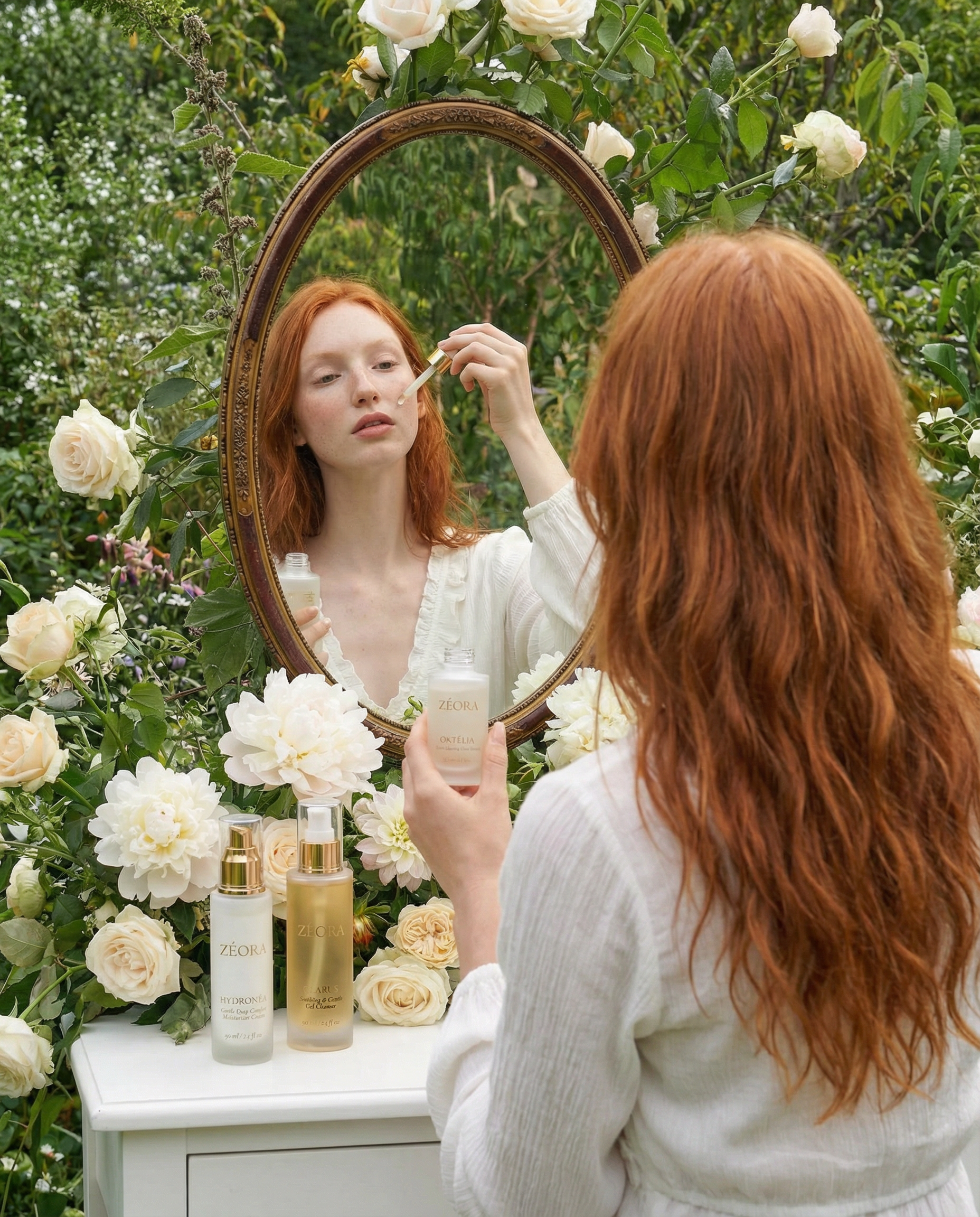
- Oktélia · Calm, the serum with tocopheryl acetate. Apply 3 drops, one on the forehead and one on each cheek, and gently spread over the face until fully absorbed.
- Hydronéa · Restore, the cream with tocopheryl acetate. Apply evenly to clean facial skin after cleansing.
That order matters for comfort: cleanse first, then serum, then cream. Using Oktélia and Hydronéa together means vitamin E is part of both leave-on steps. Hydronéa doesn't contain SPF, so in the morning finish with a sunscreen of your choice.
A note for sensitive skin
Hydronéa is our fragrance-free step. Clarus and Oktélia do contain fragrance from natural sources. Oktélia and Hydronéa both contain sweet almond oil, so if you have a nut allergy, please check with your doctor first. Every full ingredient list is on its product page, so you can check each one before you buy.
If your skin is sensitive, introduce one new product at a time and patch-test first. The American Academy of Dermatology explains how to test a skincare product before using it on your face. Stop using a product if irritation occurs.
For a simple look at everyday skin barrier support, see our guide for sensitive skin.
Keep reading
- Panthenol for Sensitive Skin: The Soft Comfort in Hydronéa
- Grape Seed Oil for Sensitive Skin: The Light Oil in Oktélia & Hydronéa
- Jojoba Oil for Sensitive Skin: The Soft Oil in Hydronéa
- Shea Butter for Sensitive Skin: The Soft Butter in Oktélia
This article is general skincare information, not medical advice. ZÉORA products are cosmetics, not medicines. If you have a skin condition, or notice persistent redness, itching, swelling or a rash, please speak with a board-certified dermatologist before changing your routine.